
 14:42
14:42
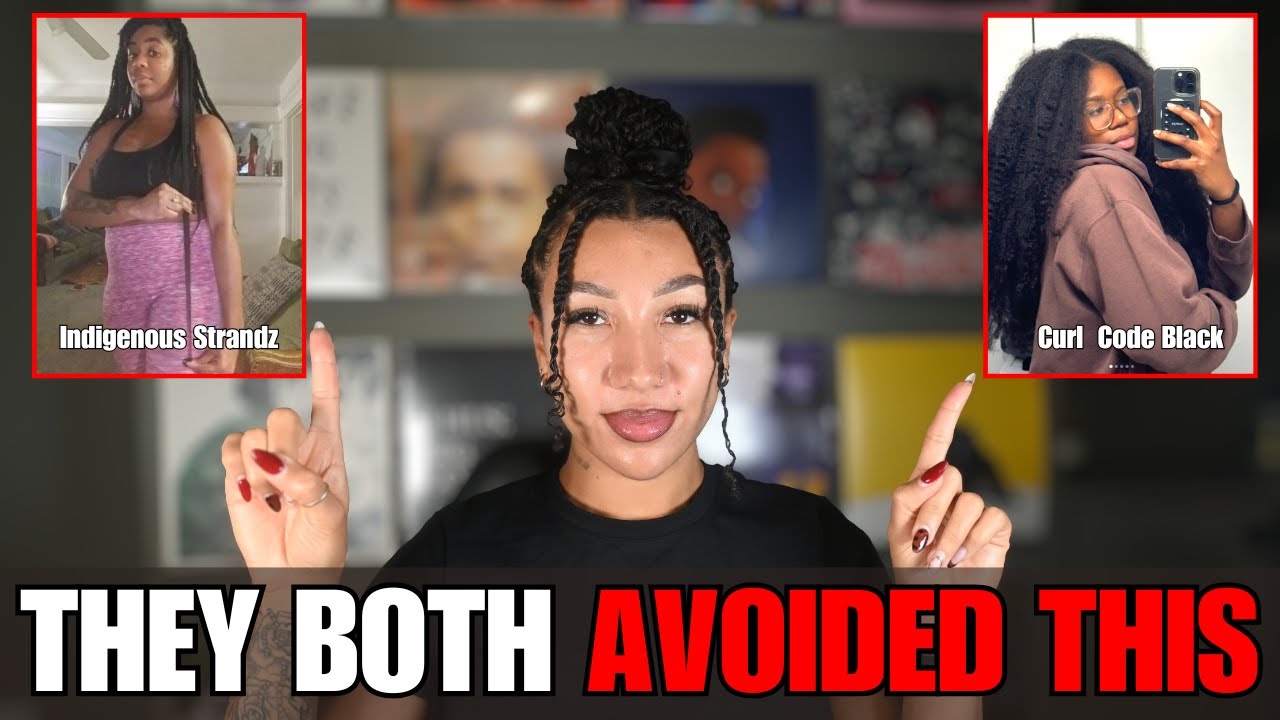
6 Things Curl Code Black & Indigenous Strands DID NOT DO To Reach Butt-Length Hair
Keke Kurly
To achieve butt-length hair, minimize manipulation, keep hair protected, and focus on internal health.
Executive Summary
In the video, the creator analyzes the hair growth strategies of two influencers, Kelco Black and Indigenous Strands, highlighting six key practices they avoided to achieve butt-length hair. These practices include minimizing hair manipulation, avoiding loose hairstyles, refraining from using detangling tools, opting for non-tap water for moisturizing, ensuring consistent hydration, and focusing on internal health factors such as diet and exercise. The insights emphasize the importance of protective styling and holistic care in promoting healthy hair growth.
Key Takeaways
- Minimize hair manipulation by using low-manipulation protective styles like twists or braids, and keep them in for extended periods.
- Avoid leaving hair loose in protective styles; secure it in buns or wraps to prevent tangling and breakage.
- Use finger detangling instead of tools to minimize breakage; gently work through knots with your fingers for better control.
- Replace tap water with distilled water or aloe vera juice for moisturizing to avoid harmful minerals that can damage hair.
- Regularly moisturize your hair to prevent dryness; use the LCO method and pay extra attention to the ends.
- Focus on internal health by maintaining a balanced diet, exercising, and staying hydrated to support hair growth.
Key Insights
- Both Kelco Black and Indigenous Strands emphasize low manipulation styles, highlighting that minimizing hair handling is crucial for length retention and overall hair health.
- The use of non-tap water for moisturizing, such as distilled water or aloe vera juice, reveals a unique approach to avoiding mineral buildup that can harm hair.
- Both creators advocate for finger detangling over tools, suggesting that gentler methods can significantly reduce breakage and promote healthier hair growth.
- The focus on internal health, including diet and exercise, underscores the interconnectedness of overall wellness and hair vitality, challenging the notion that external products alone suffice.
- Their shared commitment to moisture retention through regular re-moisturizing practices illustrates the importance of proactive hair care in preventing dryness and breakage.
Summary Points
- Both creators avoid frequent hair manipulation to promote length retention and minimize breakage.
- They keep their hair in protective styles, preventing loose ends and tangling.
- Finger detangling is preferred over tools to reduce hair damage.
- They use distilled water or aloe vera juice instead of tap water for moisturizing.
- Both focus on internal health, including diet and exercise, for optimal hair growth.
Detailed Summary
- The video compares two natural hair creators, Kelco Black and Indigenous Strands, focusing on six things they did not do to achieve butt-length hair, emphasizing the importance of avoiding certain practices for hair growth.
- Both creators minimize hair manipulation by using protective styles like twists, which they leave in for extended periods. This low manipulation approach is crucial for retaining length and preventing breakage.
- Neither creator allows their hair to remain loose in protective styles. They keep their hair secured in buns or wraps, which protects the ends and helps retain moisture, reducing the risk of tangling and breakage.
- Kelco Black and Indigenous Strands both avoid using tools for detangling, opting for finger detangling instead. This gentle method prevents excessive breakage, especially for coily hair types that can be damaged by combs or brushes.
- Both creators refrain from using tap water for moisturizing their hair, opting instead for distilled water or aloe vera juice. This choice is based on the belief that tap water may contain harmful minerals that can damage hair over time.
- They emphasize the importance of maintaining moisture levels in their hair, utilizing the LCO (Liquid, Cream, Oil) method for hydration. Regular moisturizing prevents dryness, which can lead to breakage and hinder hair growth.
- Kelco Black and Indigenous Strands focus on internal factors for hair health, such as diet and exercise, recognizing that external products alone won't ensure hair growth. A balanced diet and proper hydration are essential for healthy hair.
- The video concludes by encouraging viewers to consider both internal and external factors in their hair care routines, highlighting that neglecting one's overall health can impede hair growth and retention.
What is the primary method of length retention used by both Kelco Black and Indigenous Strands?
Which of the following is NOT a practice that both ladies avoid for hair growth?
What type of water do both Kelco Black and Indigenous Strands prefer to use for moisturizing their hair?
What is the LCO method mentioned in the video?
Why do both ladies avoid using tools for detangling?
What common internal factor do both ladies emphasize for hair growth?
What does Kelco Black say about the importance of moisturizing hair?
What is a common consequence of neglecting hair moisture as mentioned in the video?
What is a common practice both Kelco Black and Indigenous Strands avoid for hair growth?
Both Kelco Black and Indigenous Strands avoid frequent manipulation of their hair. This practice helps in retaining length and minimizing breakage, as excessive manipulation can lead to damage.
What protective styling method do both creators primarily use?
Both creators primarily use twists as their protective styling method. Kelco Black prefers mini twists, while Indigenous Strands opts for medium-sized twists, which they leave in for extended periods.
How do Kelco Black and Indigenous Strands protect their hair ends?
They keep their hair in protective styles that are not loose, such as buns or hair wraps. This helps to protect the ends from tangling and breakage.
What detangling method do both creators prefer?
Both Kelco Black and Indigenous Strands prefer finger detangling over using tools like combs or brushes. This method is gentler on their hair and helps prevent breakage.
What type of water do both creators avoid for moisturizing their hair?
Both creators avoid using tap water for moisturizing their hair. Instead, Kelco Black uses distilled water, while Indigenous Strands uses aloe vera juice, as tap water may contain harmful minerals.
What moisturizing method do both creators use?
Both creators use the LCO method (Liquid, Cream, Oil) for moisturizing their hair. They emphasize the importance of keeping their hair moisturized to prevent dryness and breakage.
What is the significance of diet in hair growth according to the creators?
Both creators stress the importance of a balanced diet for hair growth. They believe that what you consume affects hair health, and a poor diet can lead to hair thinning and breakage.
How do the creators ensure their hair stays moisturized?
Kelco Black and Indigenous Strands regularly monitor their hair's moisture levels and re-moisturize as needed, rather than waiting for wash days. This proactive approach helps maintain healthy hair.
What is a key factor in length retention mentioned by the creators?
A key factor in length retention mentioned by both creators is minimizing hair dryness. They focus on moisturizing their hair frequently to prevent breakage and tangling.
What external factors do the creators consider for hair growth?
The creators consider internal factors such as diet, exercise, and hormone balance as essential for hair growth. They believe that relying solely on products is insufficient for achieving healthy hair.
What is the impact of using tools for detangling according to the creators?
Using tools like combs or brushes can lead to increased breakage, especially for coily hair types. Both creators advocate for finger detangling to minimize damage.
What is the benefit of protective styling for hair growth?
Protective styling helps to reduce manipulation and protect the hair from environmental stressors. It allows for length retention by keeping the hair tangle-free and moisturized.
Why do the creators avoid added hair in their styles?
Both creators avoid using added or synthetic hair in their styles to focus on their natural hair. This helps them maintain the health of their own hair and avoid additional breakage.
What do the creators suggest about monitoring hair health?
The creators suggest that regularly assessing hair health is crucial. Observing moisture levels and signs of dryness can help prevent damage and promote better hair growth.
Study Notes
In this video, Kiki introduces a comparative analysis of two natural hair creators, Kelco Black and Indigenous Strands, focusing on six key practices they avoided to achieve butt-length hair. The video emphasizes the importance of understanding what not to do in hair care routines to promote healthy growth. Kiki invites viewers to engage with her channel, which specializes in curly hair tips and product reviews, setting the stage for the detailed discussion that follows.
The first critical practice both Kelco Black and Indigenous Strands avoided is frequent manipulation of their hair. High tension styling and constant manipulation are detrimental to length retention. Instead, both creators primarily use twists as their protective styling method, with Indigenous Strands opting for medium-sized twists and Kelco Black favoring mini twists. They leave these styles in for extended periods, minimizing manipulation and allowing their hair to retain moisture and reduce breakage. This approach is highlighted as a key factor in their hair growth success.
Both ladies do not leave their hair loose while in protective styles. Instead, they keep their hair secured in buns or wrapped, which protects the ends and helps retain moisture. This practice prevents tangling and reduces friction that can lead to breakage. Kiki emphasizes that maintaining hair in a secured state is crucial for protecting the hair while it is styled, which is a common strategy among successful natural hair enthusiasts.
A significant practice both creators avoid is the use of tools for detangling. Instead, they rely on finger detangling, which is gentler on the hair and reduces breakage. Kelco Black has mentioned that she primarily used her fingers during her hair growth journey, while Indigenous Strands echoes this sentiment, stating that tools can disrupt the natural curl pattern of coily hair. This method is recommended for maintaining hair integrity and minimizing damage during detangling.
Both Kelco Black and Indigenous Strands do not use tap water to moisturize their hair. Instead, Kelco Black uses distilled water, while Indigenous Strands prefers aloe vera juice. The video discusses the potential negative effects of tap water, such as the presence of minerals that can harm hair health. By opting for alternatives, both creators have found better results in maintaining moisture levels in their hair, which is crucial for preventing dryness and breakage.
The fifth practice both ladies focus on is preventing their hair from becoming dry. They emphasize the importance of regularly moisturizing their hair, especially when in protective styles. Kelco Black advocates for using the LCO (Liquid, Cream, Oil) method for moisturizing, while both creators utilize castor oil as a sealant. Kiki highlights that neglecting moisture can lead to brittleness and breakage, making it essential to monitor hair hydration levels consistently.
The final point discussed is that both creators do not solely rely on external factors for hair growth. They recognize the importance of internal health, including diet, exercise, and overall well-being, in promoting hair health. Kelco Black mentions the significance of a balanced diet free from processed foods, while Indigenous Strands discusses the benefits of exercise and stress management. This holistic approach underscores that hair health is not just about products and styling but also about nurturing the body from within.
Key Terms & Definitions
Transcript
I compared these two buttlength hair creators, Kelkur Black and Indigenous Strands to see if there was anything in common between these two ladies that they did not do and that they avoided in order to get their hair right down to butt length. And yes, there were absolutely six things that both of these ladies did. And I'm going to share these things with you today. What's up, curlies? Welcome back to my channel. It's your girl Kiki. And if you are new here, I do all things curly hair tips, product reviews, and styling. Today's video is all about the six things that Indigenous Strands and Kelco Black did not do in order to get their hair to butt length and even further on their natural hair growth journeys. So, doing this research, it was really interesting to see all of the things that these ladies have done. If you are familiar with my channel, you will have seen a lot of my comparison videos between similarities with creators. And this one is a little bit different cuz we're going on what to avoid in order to grow hair. The first thing that both of these ladies did not do is they both don't manipulate their hair often. This is a really common thing that we see across natural hair creators. Manipulation and high tension styling is something that completely goes against length retention for most of us. And in this case, it [music] is completely that both ladies actually use twists as their primary method for length retention. Indigenous strands likes to use more of a mediumsiz twist whereas Calco Black, she actually uses mini twist predominantly for these styles [music] and they both leave their hair in for months on end. This is something that they both do. They do not manipulate the hair. They install it. They leave it. They will moisturize their hair in the twists. They will wash it if necessary, but they absolutely do not manipulate their hair often. And I think this is one of the main factors that contribute to both of the lengths that these ladies have been able to attain. Let's just hear what Kalco Black has to say on this topic. So, the main focus of low manipulation protective styling is to reduce the amount of times you're manipulating your hair. of protective styling. I usually opt for um two strand twists or loose cornrows. Um for me, these are two of my go-to protective styles for my hair. My hair loves those styles. Um I like to keep them loose. I like to keep them free flowing. I don't like anything tight on my hair because like unnecessary breakage that we don't need. So the second thing that both these ladies do not do is they both do not leave their hair loose. And by loose I [music] mean in the protective styles that they use, they don't have them hanging down and [music] they don't have them kind of free flowing. And what this does is it protects [music] them. It protects the ends. It allows the hair to stay tanglefree. It allows moisture to be [music] retained in the hair and ultimately it just protects the ends. Kelco Black. She mentions that she uses buns and hair wraps and really similar to Indigenous Strands who also [music] keeps her hair up and buned and in a hair wrap as well. So, this one is a really really interesting one. They both not only keep the hair protected and in a protective style, but they don't let it be loose in the protective [music] style. They actually do another protective style on top of that. And I would completely agree. I'm someone who I love my twists and I love doing braids, [music] but I also make sure that within the style I will make I will [music] put it in a bun or not have it loose and dangling down just to make sure that we don't get any friction or breakage from what can occur on a day-to-day basis. If you are not subscribed to my channel, pause the video, click that subscribe button, and go back to the video. Thank you. So the third thing that both these ladies [music] do not do in order to retain and grow their hair to butt length is they both do not use tools to detangle with. Now, Kelco Black recently, I can [music] see she does use tools now, but in the times where she was growing her hair really long, [music] the research that I've done shows me that she actually discusses finger detangling a lot of the time. And the fact that she uses her hands majority to take down hairstyles, go through her hair, and then reinstall hair twists just using her fingers. And similarly, Indigenous Strands also mentions that she doesn't use tools, combs, brushes, all of that stuff to detangle her hair hair with. She will again do finger detangling. And this is a very common one amongst the natural hair community. And upon a lot of research that I've [music] done on natural hair and fine hair ladies especially, they do mention that finger detangling is the best way to go. And I would completely agree. I think at least in the first instance to section the hair off [music] and just remove any immediate knots that you can feel with your fingers is the best way because [music] we can be really gentle when we can feel the knots and tangles with our hair. We're not going to go ripping our hands and fingernails through our hair as we would if we had a tool or a wide tooth [music] comb. So, in order to prevent maximum breakage and shedding, they also just [music] do finger detangling as their primary method. Let's hear what Indigenous Strands has to say on this topic. I'll start with what I use. I use my fingers. I don't use combs and I don't use brushes. Mainly because my hair is so coily. So, if I was to use a comb or some type of detangling brush, it would just pull my coils completely out. Not all or in my opinion, not all hair types um like brushes or combs depending on what type of brush and comb it is. I know for my hair, my hair is like, "Bitch, go go go put it away." So, the fourth thing both these ladies actually don't do, which I find really interesting and is something that I've adopted this year, is they both do not use tap water on their hair to [music] rem moisturize their hair with. So, Kelco Black uses distilled water and Indigenous Strands uses aloe vera juice to moisturize [music] their hair with. So, I think this is really interesting that they both don't use tap water. They actually don't explain [music] if there's a reason for not using tap water, but we can only assume that we know that tap water doesn't have the best benefits for our hair. It [music] does contain minerals and metals that often you will see if you live in a hard water area. And to prevent any of that breakage, they just don't use tap water at all. They both do use it when it comes to washing and shampooing their hair, however. But in the case of moisturizing throughout the week, we can see that they both actually don't use tap water. And this is something that I've tried to implement into my routine this year. I've instead of using tap water, I will go in with the As I Am waters that I've been absolutely loving for moisture this year. I think that my hair has been really struggling with [music] being left damp. And I'm not saying that tap water was the sole contributor to my hair being broken and damaged. [music] It was 100% and the fact that my hair was left damp for a prolonged period of time. And again, I've stopped doing that. But I've seen some real benefits this year with swapping out my tap water with a [music] actual waterbased product that is not tap water. The fifth thing that birth ladies actually [music] do not do is they both focus on not letting their hair get dry. [music] Remo moisturizing is something that I feel like is somewhat sometimes overlooked when it comes to [music] protective styles. Often when we think protective styles, we can neglect the hair that is actually in the protective style. Especially if you're someone who uses added hair. Now [music] in the case of these ladies obviously they don't use added hair. They don't use any synthetic hair. They just use their own hair and that is the predominant style they choose to wear their hair in. And with that they make sure they both focus on moisturizing their hair when it [music] gets dry. So both these ladies actually use the LCO or lock method as a method of moisturizing their hair. Kelco Black is a big fan of using castor oil as hair sealant. And likewise, Indig Indigenous Strands also uses castor oil as hair sealant. Let's just hear what Kelco Black has to say on this [music] topic. Keep your hair moisturized. When you notice that your hair is starting to get a little bit more dry, um, refresh your hair. Don't just leave it until your next wash day because then at that point your hair is going to be super dry, super brittle. Um, you want to make sure you're maintaining the moisture levels in your hair so your hair doesn't get to that point. For me, like honestly, like I've done it a couple times where like I would just not moisturize my hair for a long period of time. And listen, I paid for that. Love that so much. Um, so yeah, um, I moisturize my hair when it needs to be moisturized and I also pay extra attention to the last like 2 to 4 inches of my hair and I put extra moisture on the ends of my hair and I also seal with castor oil. I my hair has always loved castor oil and I've always sealed my hair with castor oil or like I make like an oil mix with like castor oil, avocado oil, olive oil, grape seed oil and like I just like seal with that and it and it my hair loves it. >> And I would 100% agree with this. I think that I used to be someone who would leave my hair until [music] washed day for it to be moisturized and I have soon come to the realization that that is not something that I [music] can do. I now make sure I will rem moisturize my hair throughout the week and [music] indigenous strands also mentions that you need to analyze your hair on a weekto- week [music] basis. You need to be really observant of your hair being dry and [music] not letting it get to the point where it's screaming for water. Really and truly, we need to be keeping an eye on those moisture levels because moisture and dryness can be the difference between you growing and retaining length or your hair breaking off. Often we find that when the hair is dry, it is a source of breakage. It is the reason why the hair tangles so easy because there's no lubricant for the hair to kind of just stay intact and instead it tangles up and causes single strand knots or split ends as a result. So whatever we are doing even if we're doing you know a straight blow dried style [music] the hair still needs moisture in order for the style to last. So, I think keeping an eye on our dryness and not letting our hair get too dry to the point where it's breaking off or it's tangling is something that is very, very [music] important. The sixth thing that both these ladies do not do is they both don't just rely on external factors for length retention and hair growth. By external factors, I mean [music] things like just using products or just focusing on the styles that we do with our hair and [music] really focusing on what we do internally, what we put into our body, whether we get enough exercise, whether we are having the right amount of um vitamins and a balanced diet and our hormone levels are balanced. All of these things can cause our hair to break and shed more than it actually needs to. [music] So, Calco Black mentions about, you know, having a balanced diet, not too much processed and fast food. And likewise, Indigenous Strands also mentions, you know, hair exercise routine, her um doing yoga as a form of stress reliever that could contribute to premature hair loss. So, there are all of these factors that both these ladies actually share in common that they're not just relying on. Yes, I am using an aloe vera mix to moisturize my hair. I'm [music] putting it in twists. I am trimming um this amount of times out of the year or I'm not trimming at all. They're [music] actually focused on their internal body as well. We can often neglect, I think, sometimes when it comes to natural hair growth and get a little bit caught up with what new product is on the market or what brush can we use when really and truly if that if our hormone levels are off and our iron levels are low, then all of that work is just going to be in vain because we're not going to actually see the length retained and we're most likely just going to see our hair break off [music] and shed a lot quicker than necessary. So, just to finish off, let's hear what birth ladies have to say on this [music] topic. Now, when I say internal factors, I mean things like your diet. If you're on any medications, if you have any medical conditions, these things can cause your hair to thin or even to fall out. Now, as far as diet is concerned, you really want to make sure that you're having a wellbalanced diet throughout the day because if you're eating trash, it's going to show >> diet. What you put into your body is very, very important because everything starts from within. You have to make sure that you're eating right. You're getting the proteins that you need. You're getting the nutrients that you need. You're getting the vitamins that you need in order for your hair to flourish. Taking care of your body is very important in order to see healthy, strong hair. If you're all you're eating is fast food, it will reflect in your hair. Trust me, I have been there. So, you have to make sure your diet is clean and also make sure that you are exercising regularly and also drinking plenty and plenty and plenty and plenty of water. Hope you've enjoyed this video on the six things that Indigenous Strands and Kelco Black did not do to grow maturain length. Let me know of any creators that you want me to analyze and break down their routines and I will see you in the next video.
Title Analysis
The title contains no sensational language, ALL CAPS, or excessive punctuation. It uses a straightforward approach, indicating a list of things that were not done. However, the phrase 'DID NOT DO' creates a slight curiosity gap, enticing viewers to learn what these creators avoided. Overall, it is not highly clickbait-y but does have some elements that draw interest.
The title accurately reflects the video's content, which discusses six specific practices that the featured creators did not engage in to achieve butt-length hair. The alignment is strong, with the video providing detailed explanations of each point mentioned in the title. There are no significant discrepancies between the title's promise and the content delivered.
Content Efficiency
The video presents a good amount of unique and valuable information regarding hair care practices, specifically focusing on what two creators did not do to achieve butt-length hair. However, there are instances of repetition, particularly in emphasizing the importance of low manipulation and moisture retention. While the core messages are clear, some phrases and ideas are reiterated multiple times, which slightly detracts from the overall information density.
The pacing of the video is generally steady, but there are moments where the speaker elaborates on points that could be made more succinctly. For example, the explanations of the protective styles and moisturizing methods could be condensed. While the content is informative, some sections feel drawn out, which affects the overall time efficiency. The video could benefit from a tighter structure to maintain viewer engagement.
Improvement Suggestions
To enhance information density, the speaker could minimize repetition by consolidating similar points into single, comprehensive statements. Additionally, reducing filler phrases and tangents would help streamline the content. Implementing a more structured outline with clear transitions between points could improve clarity and efficiency. Finally, summarizing key takeaways at the end would reinforce the main ideas without unnecessary elaboration.
Content Level & Clarity
The content is rated at an intermediate level (5) because it assumes some foundational knowledge about hair care, particularly for curly and natural hair. Viewers should be familiar with basic hair care practices and terminology, such as protective styling and moisture retention methods. The discussion of specific techniques and products suggests that a basic understanding of hair types and care routines would be beneficial for full comprehension.
The teaching clarity score is 8, indicating that the content is mostly clear and well-structured. The speaker presents information in a logical sequence, breaking down each of the six points effectively. The use of personal anecdotes and quotes from the featured creators enhances understanding. However, some segments could benefit from more concise explanations to avoid potential confusion, especially for viewers less familiar with the subject matter.
Prerequisites
Basic familiarity with hair care practices, particularly for curly and natural hair, is helpful. Understanding terms like protective styling, moisture retention, and detangling methods would enhance comprehension.
Suggestions to Improve Clarity
To improve clarity and structure, the speaker could provide a brief overview of key terms and concepts at the beginning of the video. Adding visual aids or on-screen text to highlight the six points as they are discussed would help reinforce understanding. Additionally, summarizing each point at the end of the discussion could aid retention and provide a clear takeaway for viewers.
Educational Value
The video provides substantial educational value by focusing on the specific practices that two successful natural hair creators avoided to achieve butt-length hair. It presents factual information about hair care techniques, such as low manipulation styling, protective styling, and the importance of internal factors like diet and hydration. The teaching methodology is effective, utilizing personal anecdotes and expert opinions from the creators, which enhances relatability and engagement. The content depth is commendable, covering six distinct practices in detail, which aids knowledge retention. Practical applications are evident as viewers can directly implement these strategies in their hair care routines. The emphasis on both external and internal factors promotes a holistic approach to hair health, facilitating comprehensive learning.
Target Audience
Content Type Analysis
Content Type
Format Improvement Suggestions
- Add visual aids to illustrate key points
- Incorporate before-and-after images of hair growth
- Include on-screen text for important tips
- Use graphics to summarize the six points discussed
- Consider a Q&A segment with viewer questions
Language & Readability
Original Language
EnglishVery easy to read and understand. Simple language and clear explanations.
Content Longevity
Timeless Factors
- Fundamental principles of hair care that apply to various hair types and textures.
- Emphasis on low manipulation and protective styling, which are widely recognized best practices in the natural hair community.
- Focus on internal health and its impact on hair growth, which is a timeless concept.
- Advice on moisturizing and maintaining hair health, relevant to anyone with natural hair.
- The discussion of avoiding certain practices (like using tools for detangling) that can lead to damage is universally applicable.
Occasional updates recommended to maintain relevance.
Update Suggestions
- Incorporate new research or findings related to hair care and growth that may emerge over time.
- Update examples or testimonials from current creators in the natural hair community to keep the content relatable.
- Add context about evolving hair care products and techniques that may enhance or alter the advice given.
- Reference contemporary trends in natural hair care to maintain relevance with new audiences.
- Include any new insights on the impact of diet and lifestyle changes on hair health that may arise.