
 12:18
12:18
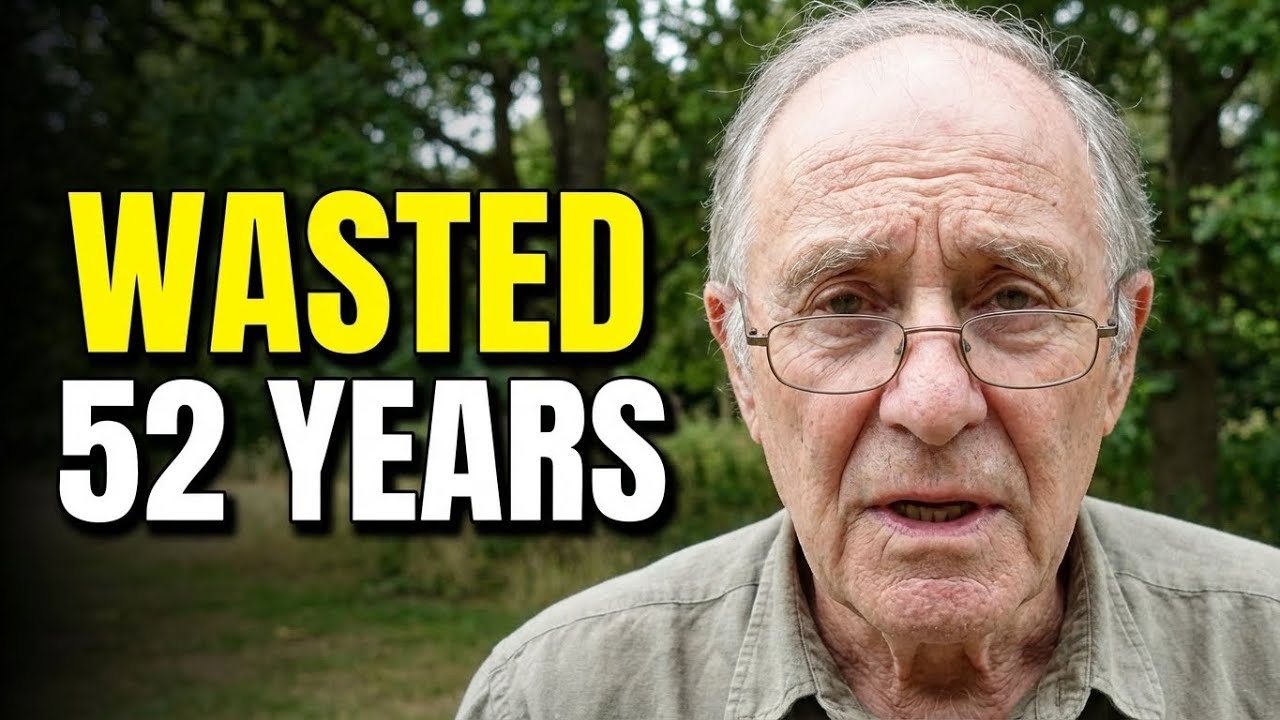
I'm 73... It Took Me 52 Years To Learn This (Don't Waste Yours)
Before It's Too Late
Stop postponing joy; live intentionally now, because time is limited and tomorrow is not guaranteed.
Executive Summary
In this poignant video, a 73-year-old man reflects on the misconceptions surrounding aging and the importance of living intentionally. After a life-altering cardiac event at 52, he realized he had been living on autopilot, prioritizing societal expectations over personal fulfillment. He urges viewers to seize the moment, prioritize meaningful relationships, and pursue their passions without delay, emphasizing that time is limited and the perfect moment to start living fully will never arrive.
Key Takeaways
- Reflect on your life daily and ask yourself if you would be satisfied if you died tomorrow; make changes if the answer is no.
- Prioritize relationships by scheduling regular calls or visits with loved ones; don’t wait for the perfect moment to connect.
- Start saying no to commitments that drain your energy and time; focus on experiences that bring you joy and fulfillment.
- Take one small step towards a long-desired goal today, whether it’s planning a trip or starting a creative project; don’t postpone your dreams.
- Practice gratitude by writing down three things you appreciate each day; this helps shift focus from what you lack to what you have.
Key Insights
- Life is often lived on autopilot, leading to a realization that true fulfillment comes from intentional living, not merely achieving societal milestones.
- The pursuit of success can become a hamster wheel, where achieving one goal leads to the need for another, leaving little room for genuine happiness.
- Regrets often stem from missed opportunities and relationships neglected in the pursuit of career and success, highlighting the importance of prioritizing meaningful connections.
- Understanding the finite nature of time can catalyze a shift in perspective, prompting individuals to live more fully and appreciate each moment rather than postponing joy.
- The irony of life is that recognizing our limited time can lead to a richer, more fulfilling existence, as we begin to prioritize what truly matters.
Summary Points
- Life is short; don't wait for the perfect time to pursue happiness and meaningful experiences.
- Success is a misleading goal; true fulfillment comes from relationships and living intentionally.
- Regrets stem from missed opportunities, not failures; prioritize what truly matters in life.
- Time with loved ones is limited; take action now to strengthen those relationships before it's too late.
- Reflect on your life regularly; ensure you are satisfied with your choices and experiences.
Detailed Summary
- The speaker, at 73 years old, challenges common beliefs about aging, stating that societal teachings on growing older are often misleading or incorrect, emphasizing the need for self-awareness and reflection.
- He recounts a life-altering cardiac event at 52, where he realized he had been living on autopilot, merely fulfilling societal expectations without truly engaging with life or understanding his own mortality.
- The speaker warns against the illusion of having time, highlighting that many people postpone their dreams and happiness, believing they will have time later, which often leads to a life filled with regrets.
- He shares personal anecdotes about his achievements, revealing that success does not equate to fulfillment, and stresses that the pursuit of success can become a never-ending cycle of dissatisfaction and chasing after more.
- Reflecting on missed opportunities, he emphasizes that regrets stem more from unfulfilled experiences and relationships than from failures, urging viewers to prioritize meaningful connections over material success.
- The speaker urges viewers to confront their mortality, encouraging them to take immediate action towards living a fulfilling life rather than waiting for the 'perfect' moment that may never come.
- He advises against sacrificing health and happiness for career ambitions, advocating for intentional living that prioritizes joy, relationships, and personal fulfillment over societal pressures.
- In closing, he implores viewers to start making changes today, sharing his own journey of transformation over the past 21 years, and emphasizes that the time to live fully is now.
What significant event occurred in the speaker's life at the age of 52?
According to the speaker, what is a common misconception about aging?
What does the speaker suggest is a poor goal in life?
What regret does the speaker mention regarding his relationship with his father?
What does the speaker identify as the most important aspects of life?
What advice does the speaker give regarding the pursuit of happiness?
How does the speaker feel about his life at 73 compared to when he was 30?
What does the speaker mean by 'the goalposts keep moving'?
What is the primary message the speaker wants to convey to younger people?
What does the speaker suggest about the concept of 'someday'?
What realization did the speaker have after their cardiac event?
The speaker realized they had been living life on autopilot, merely going through the motions and meeting others' expectations without truly living.
What is the biggest lie people tell themselves about time?
People often tell themselves, 'I have time,' believing they can postpone living fully until a later date, which leads to regret.
How does success relate to happiness according to the speaker?
The speaker argues that success is a poor goal, as achieving it often leads to a temporary high followed by the need for new goals, leaving one unfulfilled.
What does the speaker wish they had prioritized more in life?
The speaker wishes they had prioritized time with loved ones, meaningful work, and experiences over material achievements and career success.
What is a common regret mentioned by the speaker?
Common regrets include missed opportunities, deteriorated relationships, and experiences not pursued due to being too busy with work.
How did the speaker change their life after their heart attack?
Post-heart attack, the speaker stepped back from work, started saying no to unimportant obligations, and began pursuing long-delayed experiences and relationships.
What advice does the speaker give regarding relationships?
The speaker advises to cherish relationships, call loved ones more often, and not take time with them for granted, as it is limited.
What does the speaker mean by 'the goalposts keep moving'?
This phrase means that after achieving one goal, new goals arise, leading to a continuous chase for more, which can prevent true satisfaction.
What is the significance of the phrase 'someday is today'?
This phrase emphasizes the importance of taking action now rather than postponing dreams and experiences for an uncertain future.
What lesson does the speaker want to impart to younger generations?
The speaker wants younger generations to understand the value of living intentionally and not waiting for the perfect moment to pursue their passions.
What does the speaker suggest about the nature of time?
The speaker suggests that time is limited and precious, and that one should not waste it on unfulfilling pursuits or procrastination.
How does the speaker describe their life at 73 compared to when they were younger?
At 73, the speaker feels happier and more fulfilled because they have learned to live intentionally and appreciate each day, unlike when they were younger.
What is the speaker's perspective on achieving goals?
The speaker believes that achieving goals can lead to a temporary feeling of happiness, but ultimately, it does not provide lasting fulfillment.
What does the speaker regret about their relationship with their father?
The speaker regrets not spending more time with their father and not addressing their complicated relationship before it was too late.
Study Notes
The speaker, at 73 years old, begins by challenging common beliefs about aging and the misconceptions surrounding it. He emphasizes that many people, including authority figures like parents and teachers, may not provide the truth about aging and life. He shares that he spent the first 50 years of his life under the same illusions, believing he had everything figured out. This sets the stage for the critical insights he plans to share, which stem from his own life experiences and a significant turning point at age 52.
At the age of 52, the speaker experienced a cardiac event that forced him to confront his mortality. This incident occurred during a mundane meeting and resulted in him waking up in a hospital bed. The doctor referred to this experience as 'luck,' which he later realized was a profound truth. This moment of vulnerability led him to reflect on his life choices and the realization that he had been living on autopilot, merely existing rather than truly living. This revelation is pivotal in understanding the urgency of his message.
The speaker reflects on the years he spent living without intention, merely checking boxes and meeting societal expectations. He expresses regret over the life he would have left behind had he died that day, filled with material achievements that would soon be forgotten. He warns viewers against the common belief that they have plenty of time to pursue their dreams and happiness, highlighting that life is often spent chasing goals that keep moving further away, leading to a sense of emptiness and unfulfillment.
The speaker addresses the dangerous mindset of believing 'I have time' and postponing happiness for the future. He points out that many people, especially the younger generation, fall into the trap of thinking they will be happy once they achieve certain milestones, such as promotions or financial stability. He stresses that this mindset leads to a lifetime of regret, as the pursuit of success often overshadows the importance of living in the moment and cherishing relationships and experiences.
Reflecting on his life, the speaker shares that his regrets stem not from failures but from missed opportunities and unexpressed love. He recounts personal experiences, such as not taking a trip to Japan or neglecting relationships with family members. He emphasizes that the things that haunt us are often the moments we let slip away, urging viewers to recognize that time with loved ones is finite and should be prioritized over work and achievements.
Following his cardiac event, the speaker made significant changes in his life, stepping back from work and focusing on what truly mattered. He learned to say no to obligations that drained him and yes to experiences that brought joy. Over the past 21 years, he has gained a deeper understanding of life, emphasizing that meaningful work and time spent with loved ones are what truly enrich our lives. This transformation highlights the importance of living intentionally and appreciating each day.
The speaker shares insights on how understanding the limited nature of time can lead to a more fulfilling life. He encourages viewers to evaluate their lives and ask themselves if they would be satisfied if they died tomorrow. This self-reflection is crucial for making meaningful changes. He stresses that the perfect time to start living intentionally will never come, and urges viewers to take action now, rather than postponing joy and fulfillment for an uncertain future.
The speaker reflects on the legacy one leaves behind and the importance of relationships. He shares a poignant story about his father's passing and the regrets he carries regarding their relationship. He emphasizes that relationships with family and friends are what truly matter, and that neglecting these connections in pursuit of success can lead to deep regret. The urgency of nurturing these relationships is a central theme in his message.
In conclusion, the speaker urges viewers to stop waiting for the right moment to live their lives fully. He shares that the last 21 years have been the richest of his life, filled with intentional living and meaningful experiences. He encourages everyone to prioritize what matters, take risks, and express love. The video serves as a powerful reminder that life is short and that the time to act is now, not later. He invites viewers to share their thoughts and commit to making changes in their lives.
Key Terms & Definitions
Transcript
I'm 73 years old [music] and I'm about to tell you something that might upset you. Everything you think you know about getting older is completely wrong. [music] And the worst part, the people who should be telling you this, your parents, your teachers, uh, society, they're either lying to you or they don't know themselves. [music] You see, I spent the first 50 years of my life believing the same lies you probably believe right now. I thought I [music] had it all figured out. I had the career, the house, the respect [music] of my peers. But at 52, something happened that shattered everything I thought I knew. And what I discovered in the 21 years since then has completely changed how I see life, death, and everything in between. But before I tell you what happened, I need you to understand something. The reason I'm making this video isn't to impress [music] you or to make myself feel wise. I'm making this because I'm running out of time [music] and there are things you need to hear before it's too late. Not for me, [music] for you. At 52, I had what doctors call a cardiac event. [music] Um, that's a fancy way of saying my heart tried to kill me. Um, I was in a meeting discussing quarterly projections [music] when suddenly the room started spinning. The next thing I remember is waking up in a hospital bed with tubes coming out of my arms [music] and my wife crying in the corner. The doctor said I was lucky. Lucky. I had just come face to face with my own mortality. [music] And they called it luck. But you know what? They were right. Because lying in that hospital [music] bed with nothing to do but think, I realized something terrifying. I had been living my entire life on autopilot. I wasn't really alive. I was just going through the motions, [music] checking boxes, trying to meet everyone else's expectations. [music] And here's the part that haunts me to this day. If I had died that day, if my heart had stopped permanently, what would I have left behind? [music] A nice house, a retirement account, a collection of achievements that nobody would remember in 5 years. Let me tell you the biggest lie you're probably telling yourself right now. [music] I have time. I'll do that later. When I'm older, I'll finally live the life I want. I see young people in their 20s, 30s, even 40s, [music] and they're all saying the same thing. When I make more money, then I'll be happy. When I get that promotion, [music] then I'll relax. When the kids are grown, then I'll travel. When I retire, then I'll finally do what I love. Let me save you 50 years of regret with one simple truth. That day never comes. You [music] know why? Cuz the goalposts keep moving. You get the promotion and suddenly you need the next one. You make [music] more money and suddenly you need more money. You're always chasing [music] something just out of reach. And before you know it, you're 70 years old wondering where your life went. I did this. I spent 30 years climbing a ladder only to realize when I got to the top that it was leaning against the wrong wall. [music] And you can't climb back down and start over. Time doesn't work that way. Here's something nobody tells you when you're young. Success is a terrible goal. And I say this as someone who achieved [music] everything I set out to achieve. I made partner at my firm. [music] I bought the house. I had the respect of my colleagues and you know what? None of it mattered. You achieve your goal and for about 48 hours you feel amazing. Then the feeling fades. You're back to baseline. Now you need a new goal, a bigger achievement, more validation. It's a hamster [music] wheel. I had a friend who died 3 years ago at 68. Worked 70our weeks his entire life. built a multi-million dollar business, never took a real vacation, [music] kept saying he'd slow down next year. Next year came and he had a stroke. At his funeral, his son said, "My father was a successful man, but I barely knew him." Is that the legacy you want? [music] Your regrets won't be about the things you did wrong. They'll be about the things you didn't do at all. I don't lie awake at night thinking about failed business [music] deals. Those don't matter. You know what keeps me up? The trip to Japan I never took because I was too busy. The relationship with my brother that I let deteriorate. The book I always wanted to write but never started. [music] The time I didn't spend with my kids because I was working late. These things eat at [music] you. The missed opportunities. The roads not taken. The love you didn't express. The risks [music] you didn't take because you were afraid. The people you love, your parents, [music] your siblings, your close friends, you think you have unlimited time with them. You don't. And one day that time will run out. My father died when I was 45. We had a complicated relationship and I was always too busy to really work on it. I kept thinking we'd have time to talk when I was less busy. We never got that chance. Heart attack gone within hours. And you know my biggest regret? All the Sundays I didn't call him. All the times I was too tired to drive over for dinner. All the little moments I let slip away. [music] There won't always be more. After my heart attack, I made big changes. Stepped back from work. Started saying no to things that didn't matter. Started saying yes to things I had put off for decades. [music] In these last 21 years, I've learned more about life than I did in the previous [music] 52. What matters is embarrassingly simple. Time with people you love. Work that feels meaningful to you. [music] Experiencing things, not owning things, creating memories, being present. I know it sounds simple. When I was your age, I would have rolled my eyes. Sure, but I have bills to pay. And yes, [music] you do. I'm not saying quit your job. I'm saying don't sacrifice what matters for what [music] doesn't. Here's a question I want you to ask yourself, and I want you to answer it honestly. If you died tomorrow, would you be satisfied with the life you've lived so far? Not would people be impressed by your eulogy, not did you achieve enough, [music] just would you be satisfied? If the answer is no, then what are you waiting for? What are you doing with your time that's [music] so important that you're willing to gamble your one precious life on it? I'm 73 years old. [music] I've been lucky enough to have good health since that heart attack. But every morning when I wake up, I'm aware that I'm on borrowed time. We all are really. But most young people don't realize this. They think they're invincible. They think they have forever. You don't. I have grandchildren, [music] three of them, and when I look at them, I see the same patterns I see in most young people [music] today. They're stressed, they're anxious, they're chasing things that won't make them happy. They're making the same mistakes I made. And I [music] try to tell them, I try to share what I've learned, but you know what? They don't really listen. Not because they're bad kids, but because they can't. They're living in a storm right now. They can't see the patterns yet. They think their situation is unique. [music] That the old rules don't apply to them. That's why I'm making this video. [music] Because maybe, just maybe, if enough people hear this message, someone will actually listen. [music] Someone will make different choices. Someone will avoid the regrets that haunt people like me. every single day. You're getting closer to death. Nobody likes to think about this. But you don't have unlimited [music] time. Neither do the people you love. Your parents, if they're still alive, they're getting older every day. [music] One day, probably sooner than you think, they won't be here. Your friends, your spouse, your children, none of these relationships last forever. >> [music] >> So, what are you going to do? Keep putting off that phone call? Keep postponing that trip? Keep telling yourself you'll make time later? Or are you going to wake up today and start living like your time is limited? Because it is. If I could go back and talk to my 30-year-old self, here's what I would say. Stop trying to impress people who don't matter. Stop sacrificing your health for your career. Stop putting [music] off joy until someday. Stop waiting for permission to live the life [music] you want. Start calling your parents more often. Start taking the trips you dream about. [music] Start doing the things that scare you. Start saying no to obligations [music] that drain you. Start saying yes to experiences that fulfill you. And most importantly, [music] start now. Not next year. Not after this project. Not when you have more money or more time or more whatever. now because I promise you the perfect time will never come. [music] Life will always be messy and complicated and full of reasons to wait. But if you wait, you'll wake up one day and realize you waited your entire life away. I'm 73. If I'm lucky, maybe 10 or 15 more years. Maybe 20 [music] if blessed. Probably less. And I'm okay with that because these [music] last 21 years have been the richest of my life. Not because I've made more money. [music] Because I've finally started living intentionally, appreciating every day, prioritizing what matters. I've [music] traveled to places I always wanted to see. Deepened relationships with my children and grandchildren, pursued hobbies I put off, forgiven people I held grudges against, [music] said I love you countless times. I'm happier now at 73 [music] with less time ahead than I was at 30 when I thought I had all the time in the world. That's the [music] irony. When you understand time is limited, you start to actually live. You stop wasting it. You stop [music] postponing joy. You start creating the right time. You have a choice right now, [music] today. Keep living the way you're living. Chasing success, putting off happiness, telling yourself you'll make time later or wake up. Realize time is running out faster than you think, and the life you're waiting to live needs to start now. I can't make this choice for you, but I [music] can tell you, you don't want to be 73 looking back wishing you made different choices. [music] Don't waste 52 years figuring this out. Learn from my mistakes. Live intentionally. Prioritize what matters. Stop waiting for someday. Someday is today. [music] It always has been. If this resonates, share this video. Leave a comment. Tell me what you're going to do differently. [music] Subscribe because I have more truths to share and not much time left. The clock is ticking. What are you going to do with your time?
Title Analysis
The title has some attention-grabbing elements, particularly the phrase 'Don't Waste Yours,' which creates a sense of urgency. However, it lacks extreme clickbait tactics such as ALL CAPS, excessive punctuation, or sensational language. It does not exaggerate the content but rather hints at a personal lesson learned over a long period, which aligns with the video's reflective nature.
The title accurately reflects the video's content, which focuses on life lessons learned over 52 years and the urgency to live intentionally. While it may not capture every nuance of the message, it effectively conveys the essence of the speaker's journey and the importance of not delaying meaningful experiences.
Content Efficiency
The video presents a high density of unique, valuable information, particularly regarding the importance of living intentionally and prioritizing relationships over material success. While there are some repetitive phrases, such as 'you don't have unlimited time' and 'start now,' they serve to reinforce key messages rather than detract from the overall content. The majority of the transcript conveys new insights, making it rich in information.
The pacing of the video is generally effective, with a clear progression from personal experience to broader life lessons. However, certain sections could benefit from more concise delivery, particularly where the speaker reiterates similar points about regret and the passage of time. While the emotional weight of the narrative is important, some elaborations could be trimmed to enhance overall time efficiency.
Improvement Suggestions
To improve density and efficiency, the speaker could eliminate some of the emotional buildup and repetitive affirmations of key points. For instance, summarizing the lessons learned in a more concise manner could reduce runtime without sacrificing impact. Additionally, incorporating more direct calls to action or summarizing insights at the end could reinforce the message while maintaining engagement.
Content Level & Clarity
The content is accessible to a wide audience, particularly those in their 20s to 50s who are contemplating life choices. It requires basic familiarity with life experiences and concepts of time management and personal fulfillment, hence the score of 3. The speaker shares personal anecdotes that resonate with common life challenges, making it relatable without needing specialized knowledge.
The teaching clarity is high, scoring a 9. The speaker's narrative is structured logically, moving from personal experience to broader life lessons. The use of anecdotes and rhetorical questions engages the audience and enhances understanding. The flow is coherent, with clear transitions between ideas, making the message impactful and easy to follow.
Prerequisites
No specific prior knowledge is required, but familiarity with concepts of life goals, time management, and personal reflection may enhance understanding.
Suggestions to Improve Clarity
To further improve clarity, the speaker could include a brief summary of key points at the end of the video. Visual aids or on-screen text highlighting major themes could also reinforce the message. Additionally, breaking down complex ideas into simpler segments or using bullet points for key takeaways could enhance retention and understanding.
Educational Value
The content of the video provides significant educational value through its exploration of life lessons learned over decades. It challenges common societal beliefs about success and aging, encouraging viewers to reflect on their own lives and priorities. The speaker shares personal anecdotes that illustrate the consequences of living on autopilot and the importance of meaningful relationships and experiences. This narrative approach enhances knowledge retention by making the lessons relatable and memorable. The practical application is evident as viewers are prompted to evaluate their own life choices and consider immediate changes. The content effectively facilitates learning by combining emotional engagement with actionable insights, making it a powerful tool for personal development.
Target Audience
Content Type Analysis
Content Type
Format Improvement Suggestions
- Incorporate visual storytelling elements to enhance engagement
- Add on-screen text highlights for key points
- Include relevant imagery or video clips to illustrate personal anecdotes
- Utilize background music strategically to evoke emotions
- Consider a Q&A segment to address viewer questions and enhance interaction
Language & Readability
Original Language
EnglishVery easy to read and understand. Simple language and clear explanations.
Content Longevity
Timeless Factors
- Universal themes: The content discusses aging, mortality, and the importance of living intentionally, which are experiences everyone can relate to regardless of the time period.
- Fundamental principles: It emphasizes the value of relationships, experiences over material possessions, and the urgency of living life fully, which are timeless concepts.
- Life lessons: The insights shared are based on personal experiences that resonate across generations, making them relevant to both young and older audiences.
- Cultural relevance: The struggles with work-life balance and the pursuit of happiness are ongoing issues in society, ensuring the content remains pertinent.
- Emotional connection: The heartfelt narrative and personal reflections create a strong emotional appeal that transcends time.
Minimal updates needed - content remains relevant long-term.
Update Suggestions
- Incorporate recent statistics on aging and mental health to provide current context.
- Reference contemporary examples of individuals or movements that align with the themes of intentional living and prioritizing relationships.
- Update anecdotes or stories to include more diverse perspectives from different age groups or backgrounds.
- Add insights on how modern technology impacts relationships and the pursuit of happiness.
- Include recent trends in work-life balance and mental health awareness to keep the content relatable.