
 22:24
22:24
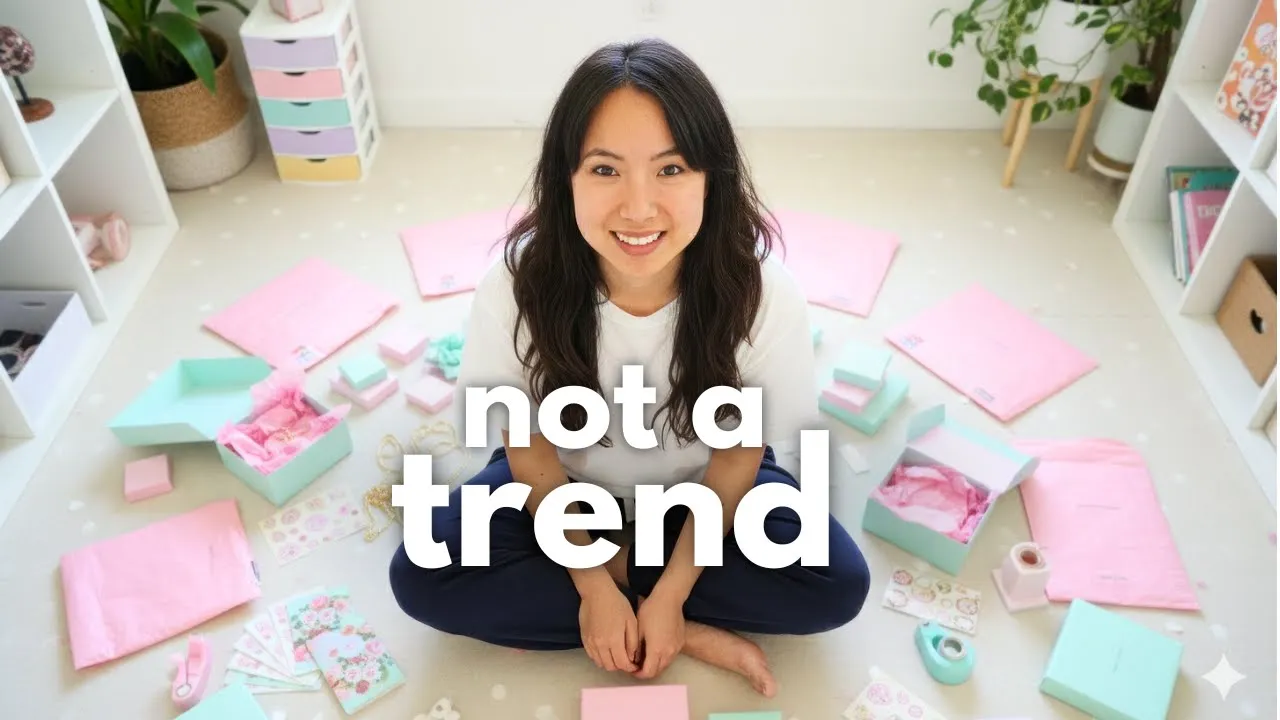
The 5 most profitable creative businesses to start in 2026
Creative Hive
Focus on a specific niche within a niche to stand out and build a loyal customer base.
Executive Summary
The video outlines five profitable creative business ideas for 2026, emphasizing the importance of identifying specific problems to solve rather than focusing on competition. Key recommendations include creating products with recurring value, specializing in niche services, teaching crafts, offering personalized products, and leveraging print-on-demand models with unique designs. The presenter stresses the significance of quality, specificity, and building a strong moat to differentiate from competitors, ultimately guiding viewers to think deeply about their target audience and the unique value they can provide.
Key Takeaways
- Identify a specific problem your target audience faces and create a product that addresses it directly.
- Focus on building a product with recurring value to encourage repeat purchases and customer loyalty.
- Narrow your niche to stand out; instead of selling candles, target a specific audience like those seeking relaxation aids.
- Develop a unique selling proposition (moat) that makes your business hard to replicate, such as a distinctive process or style.
- Prioritize quality in your offerings; ensure your product or service genuinely solves a problem and exceeds customer expectations.
- Consider starting a teaching business by offering one-on-one sessions or small workshops to share your skills with specific audiences.
Key Insights
- Focusing on solving specific problems for a niche audience can lead to sustainable business growth, as repeat customers contribute significantly to revenue without the need for constant new traffic.
- Creating a strong 'moat' around your business—through unique processes, style, or customer trust—can protect against competition and ensure long-term viability in a crowded market.
- Narrowing down to a niche within a niche allows for clearer marketing and messaging, making competition irrelevant and attracting customers who feel directly addressed by your offerings.
Summary Points
- Focus on solving specific problems to create recurring value products that encourage repeat purchases.
- Develop a unique moat to differentiate your business and reduce competition.
- Narrow your niche to attract a specific audience and simplify marketing efforts.
- Quality is crucial; aim for excellence to foster word-of-mouth referrals and long-term success.
- Consider personalized products and print-on-demand as viable business models with a unique approach.
Detailed Summary
- The video outlines five profitable creative businesses to start in 2026, emphasizing that they are not trendy or saturated and do not require a large audience to succeed.
- The speaker stresses the importance of identifying problems that people face, suggesting that businesses should focus on recurring value products that customers need to repurchase regularly, such as supplements or candles.
- A strong business moat is essential; unique qualities like taste, process, and customer trust make a business hard to replicate, allowing it to stand out in a competitive market.
- The speaker advises against broad business ideas, advocating for specificity in niches to reduce competition and improve marketing effectiveness, making it easier to connect with a targeted audience.
- Teaching your craft can be a profitable venture, but it requires clarity and empathy; you don’t need to be the best, just a few steps ahead of your students to effectively guide them.
- Personalized products maintain their appeal as they offer meaningful connections to buyers; quality is crucial, as a well-made product enhances the perceived value and customer satisfaction.
- Print on demand can be successful if approached creatively, focusing on unique designs and thoughtful branding rather than following trends, which can lead to frustration and competition.
- The speaker concludes by encouraging viewers to focus on who they want to serve rather than how to start, emphasizing that specificity and alignment with a target audience are key to business success.
What is the primary criterion for choosing profitable creative businesses according to the video?
What does the term 'moat' refer to in the context of starting a business?
Why is it important to have a niche within a niche when starting a business?
What is a common mistake people make when starting a freelancing business?
According to the video, what is one key factor that contributes to long-term business success?
What is the suggested approach for teaching a craft according to the video?
What is the benefit of personalized products as discussed in the video?
What is a critical aspect of starting a Print on Demand business?
How does the speaker suggest overcoming the fear of competition?
What is the recommended action before launching a new business idea?
What are the five profitable creative businesses to start in 2026?
The five profitable creative businesses include: 1) Recurring value products, 2) Freelancing and services for creative tasks, 3) Teaching your craft, 4) Personalized products, and 5) Print on demand.
Why is competition considered a good thing for new businesses?
Competition indicates that an idea is validated; others are already making money in that space. It suggests demand exists, which can help new businesses find their footing.
What is a 'moat' in business terms?
A 'moat' refers to unique aspects of a business that make it hard to copy, such as a distinctive style, process, or customer trust. A strong moat helps a business stand out in a competitive market.
How can recurring value products benefit a business?
Recurring value products ensure repeat purchases, reducing the need for constant new customer acquisition. Customers decide once to buy, leading to predictable monthly sales and a more stable income.
What is the importance of specificity in business niches?
Being specific in a niche allows businesses to target a particular audience, making marketing easier and reducing competition. It helps in creating clear messaging and attracting the right customers.
What mistake do many new business owners make regarding their niche?
Many new business owners stay too broad in their niche, which increases competition and makes it harder to stand out. Instead, they should focus on a niche within a niche for better results.
How does quality impact long-term success in business?
Quality is crucial for long-term success as it leads to customer satisfaction, repeat purchases, and word-of-mouth referrals. A good product reduces marketing pressure and helps maintain a loyal customer base.
What should you consider when teaching your craft?
When teaching, it's essential to be a few steps ahead of your students and to communicate effectively. Empathy and clarity are key, as students pay to avoid confusion and learn efficiently.
What is the role of personalization in products?
Personalization increases a product's perceived value and emotional significance, making customers willing to pay more. It also creates a strong moat, as the unique process or experience cannot be easily replicated.
What is a common pitfall of print on demand businesses?
A common pitfall is following trends without a unique angle. Successful print on demand businesses treat their model as a creative business, focusing on quality design and specific niches to stand out.
How can freelancers differentiate themselves in a saturated market?
Freelancers can differentiate by specializing in a niche, such as targeting specific industries or types of clients. This specificity helps them avoid price competition and positions them as problem solvers.
What is the significance of launching before perfection?
Launching before perfection allows businesses to gather real feedback and data from users. It encourages iteration and improvement based on actual customer needs rather than assumptions.
Why is it important to focus on the customer in business?
Focusing on the customer ensures that products and services genuinely meet their needs. This approach fosters loyalty and satisfaction, leading to repeat business and positive referrals.
What is the difference between teaching and being an expert?
Teaching requires the ability to explain concepts clearly and empathize with students, while being an expert is about mastering a skill. Not all experts are effective teachers.
Study Notes
In this section, the speaker emphasizes the importance of understanding the criteria for selecting profitable creative businesses. The focus is on identifying problems that people face and how to address them. The speaker encourages viewers to move beyond the fear of competition and saturation, suggesting that competition can validate an idea. The key takeaway is that by identifying a specific problem and offering a solution, entrepreneurs can create a sustainable business model without needing a large audience. This foundational understanding is crucial for generating viable business ideas.
The first type of profitable business discussed is products that offer recurring value, such as subscriptions. These products are essential because they fulfill ongoing customer needs, leading to repeat purchases without requiring constant marketing efforts. The speaker provides examples like tea, candles, and supplements, explaining that once customers decide to buy, they are likely to continue purchasing until they cancel. This model allows for a smaller audience to generate significant revenue, as repeat customers can lead to substantial monthly income with fewer sales.
The concept of a 'moat' is introduced as a critical factor for business sustainability. A moat refers to what makes a business difficult to replicate, such as unique processes, styles, or customer trust. The speaker stresses the importance of establishing a strong moat to stand out in a competitive market. Additionally, owning a domain name is highlighted as a way to create accountability and legitimacy for a new business. The speaker suggests using a .store domain to clearly indicate a commercial intent, which can enhance customer trust and increase sales potential.
The speaker discusses the common mistake of staying too broad in business offerings. To succeed, entrepreneurs should focus on narrowing their niche to serve a specific audience effectively. By going deeper into a niche, businesses can simplify marketing, clarify messaging, and reduce competition. The example of selling candles is used to illustrate how specificity can transform a general product into a targeted solution for a particular customer need. This approach not only enhances customer connection but also makes marketing efforts more effective.
Freelancing in creative fields such as video editing, design, and social media management is explored as a viable business option. The speaker acknowledges the perceived saturation in these markets but points out that there is a significant gap between the demand for skilled services and the availability of qualified providers. The key to success in freelancing is to specialize in a niche, which allows freelancers to position themselves as problem solvers rather than generic service providers. This specificity attracts the right clients and fosters word-of-mouth referrals, making marketing less burdensome.
Quality is emphasized as a fundamental aspect of long-term business success. The speaker explains that a high-quality product or service generates positive word-of-mouth, leading to repeat customers and reduced marketing pressure. When businesses focus on delivering exceptional value, they create a loyal customer base that advocates for them. The speaker warns against launching mediocre products, as this can lead to a reliance on aggressive marketing strategies. Instead, the goal should be to create something genuinely helpful and valuable to customers, which naturally encourages sales and growth.
Teaching one's craft is presented as another profitable business opportunity. The speaker clarifies that expertise does not require being the best in the field; rather, it involves being a few steps ahead of the students. Effective teaching combines clarity and empathy, allowing instructors to guide learners through challenges. The importance of niche targeting is reiterated, with examples of specific teaching areas that resonate with particular audiences. The speaker also cautions that teaching is not a passive income stream; it requires dedication and a genuine desire to help others succeed.
The discussion shifts to personalized products, which consistently attract customers due to their unique and meaningful nature. Personalization enhances perceived value and differentiates products in a crowded market. The speaker stresses the importance of quality in the base product, as personalization alone cannot compensate for a lackluster item. This combination of quality and personalization creates a compelling offering that can command higher prices and foster customer loyalty, making it a sustainable business model.
The speaker provides insights into the print-on-demand business model, emphasizing the need for creativity and differentiation. To succeed, entrepreneurs must avoid following trends blindly and instead focus on establishing a unique brand identity. The speaker advises treating print-on-demand as a legitimate business, requiring thoughtful design, quality products, and intentional branding. By taking ownership of product presentation and marketing, businesses can stand out and attract customers, rather than blending into the vast sea of generic offerings.
Key Terms & Definitions
Transcript
The five most profitable creative businesses to start in 2026 are not trendy or saturated and they don't require a big audience. I'm going to show you the types of creative businesses that will work right now that I would start myself. But before I give you the list, you first have to understand the criteria for how I chose these businesses so you can find these ideas yourself beyond this video. Teach a man to fish, you know, that sort of thing. So when starting a new business, most people are worried about the competition. Is it saturated? Is it too late? Is there still room for me? And I get it. They don't want to waste time or energy on something that won't work. But starting there is usually what paralyzes people. And that's just not helpful, right? Competition is everywhere for everything these days. And you have heard how competition can be a good thing, right? It means your idea is validated. There are people who are already making money doing what you want to do. We'll talk about that a lot more later. But the first thing I personally look at is the problem. What kind of problems do people have? How can we fix them? What's annoying people? What's taking up mental space? What do they wish they didn't have to think so hard about? So the first type of business I want to talk about is products that have recurring value, because this checks the problem box really clearly. And what I mean by this are products that people naturally need to buy again and again. So things like tea, candles, chocolate dog treats, supplements, which is something I'm interested in getting into this year for myself. So these work because they don't require the customer to re-decide every single time whether they want it or not. The decision has already been made once and they keep contributing to your monthly sales every time they run out of your product or until they cancel their subscription. And this is important because repeat purchases change the math of your business in a huge way. So this is where you don't need a big audience. If you get the niche right. If your product is for everybody, then yes, you will need a lot of traffic and customers. But if you are speaking to a very specific type of person with a very specific need, you can build a very healthy business on a much smaller audience. And also pricing matters here, too. You do not need thousands of customers if the product is priced in a way that actually supports you. So you don't need constant new traffic if the same people keep coming back to buy. Right. So say you charge $49 a month for your product and you have just 100 customers, you're already making $4900 every single month on repeat. That's only 204 customers to make $10K every month. And that's your six figure year. And you don't have to stress over finding new customers. So how do you take something like recurring products and make it actually work for you? A lot of profitable creative businesses aren't exciting. They are not what's going to go viral or get tons of views on an Instagram reel. Don't be fooled by what you see out there and don't use that social proof as evidence of what works and what actually pays you an income. Think of businesses or a product or service that make something easier, faster, more thoughtful or more personal for someone else. When something genuinely does that, people do not need to be convinced so much to buy. And if you want a more specific roadmap and more step by step instructions on how to do all of that, I have a free workshop in the link in description. You can go sign up for that after you watch this video. So the second thing I look for is a moat. And I know that word can sound very business-y but what this actually means is what makes this business hard to copy. For example, taste is hard to copy. Process is hard to copy. Your style and the trust that you have with your customers is hard to copy. When something is inherently hard to copy it makes your business stand out, meaning you don't have to worry about the competition. This is also why having your own home base matters so much. If you are building something that's meant to last you do not want everything tied to platforms you don't control. So one of the first things I personally do whenever I'm creating a new business or product idea is buy the domain name because it makes the idea real and it gives you accountability to actually start this business. Now, usually people default to a .com domain name, and that's what I normally recommend in most circumstances. But most good names are already taken which slows people down or makes them second guess their business name in the first place. And that's where .store domain names come in who I'm partnering with on today's video. If you are thinking about starting a product based business, which is a part of the list today, consider getting a .store domain. It is super clear. It tells people immediately that this isn't just a portfolio or a blog. It is a place where there are things for sale that people can buy. That kind of clarity can help with trust and intent, which can mean more sales for you. If you want to grab your own .store domain name you can go to https://go.store/ch2 and use my code CREATIVEHIVE to get a .store domain for $0.99 for your first year. And then you can also get access to elevate.store, which includes discounts and extended trials on tools like Shopify, Google Workspace, which is where you get your professional email address and other things that you will probably need anyway when you're starting your business. So people might try to copy you and they might be competition temporarily, but in the long term they just fade away. In reality, they actually cannot compete with you. You're moat is so strong. Imagine it's like back in the olden days where a castle has a moat, which can be like a river around it. Right? And the only way to get inside the castle is through a drawbridge. This is what keeps the bad guys out. If your moat is strong, it basically makes your castle impenetrable so other businesses can't come into the marketplace and destroy you. Because there is so much competition, especially with AI, it is easier than ever to start a business. But to do it well and to choose the right business in the first place is a whole other thing. And that's what this video hopefully will help you do. Now, here's the part I really want you to hear, because this applies no matter which business you choose. The biggest mistake I see people make is staying too broad. They will say things like, I sell candles or I do freelance design or I teach art, and that is usually where they stop, right? And that used to be fine five years ago, ten years ago. But it is just not enough anymore. There are millions of people who sell candles and millions of people who freelance and who teach art, right. What actually works right now is going deep, super specific, not just picking a niche, but picking a niche within a niche or even a niche within a niche within a niche. The more specific you get, the easier everything becomes. Your marketing gets easier, your messaging gets clearer, pricing gets easier. And then, as I mentioned, competition then becomes completely irrelevant. This is also where your moat comes in. Standing out doesn't mean being louder or better than everyone else because that's going to be very hard to do. But it usually just means being more specific. When you're specific enough you are no longer competing with everyone. You are serving a very particular type of person who feels like you are talking directly to them. Let me give you an example, because I know this can all sound abstract. So saying "I sell candles" is a broad niche, right? Saying "I sell soy candles for people who want cozy home vibes." Okay, now that's better, but still a bit vague. So let's try to go deeper. Saying "I sell soy candles for people who struggle to relax at night." That's a niche within a niche. And you can go even further. Say you sell soy candles specifically for people who have anxiety, who want a calming nighttime ritual that doesn't involve screen time. At that point, you are not just selling a candle, you are selling a very specific outcome to a very specific person. The second type of business I want to talk about is freelancing and services for creative tasks like video editing, social media management, design and photography. And I know this feels saturated because on the surface it looks like everyone is offering these services right now. But when you zoom in, there is actually a huge gap between how many business owners need help and how you truly good service providers there are. This is something I see constantly, both in my own businesses and talking to other business owners. People are struggling to find reliable, skilled help. Not cheap help necessarily, but good help. People who are talented have a unique style, communicate well, who don't need to be micromanaged and who actually care about the outcome. Where people go wrong with freelancing is staying too broad, staying too general, saying I'm a video editor or I do social media puts you in the most competitive bucket possible. It forces people to compare you on price, speed or availability, which is not where you want to compete. That basically makes you a commodity and you become easily replaceable. This is where going deep into a niche completely makes things make sense for you. Instead of being a general video editor you become a video editor for educational female YouTubers who sell digital products. Instead of doing social media for everyone you manage content specifically for handmade jewelry brands. Now, you're not just a service provider. You are a problem solver in a very specific context. The really cool thing is your customers are also going to naturally self-select and sell themselves to you because your messaging is so clear on who you work with. You're basically going to get the exact customers that you ask for. The assumption is that if you are so specific, it must mean that you are good at helping in that specific way that you have talked about in your messaging. So saying yes to your services becomes a no brainer. You just have to figure out how to get in front of those people in the first place. The good news is you don't need to build an audience first and you don't need to make inventory right? You just need one client with a real problem and a skill that solves it. And the key is if you do good work, they will tell their friends about you. One good client often turns into three and then five, and then referrals start coming in without you even asking. You'll have a waitlist and you never have to worry about doing your own marketing because your clients are doing it for you. Now, you don't need to offer everything. Offering fewer services usually makes you more attractive, not less. Specificity builds confidence and trust. If you just do one thing, you probably do it really well, right? Again, specificity just makes things easier. Do you see how all that works now? Of course you must actually be good at what you do or none of this matters. We're done. Just kidding. Okay. But this leads me to my next point. And this is another criteria piece that applies to every business on this list. Long term success in business almost always comes back to quality. When something is actually good, people fall in love with it. They come back, they tell their friends. And that word of mouth piece is one of those invisible factors that's really hard to measure. But it is what keeps businesses alive for years instead of failing after like a year or two. You have to give people something worth talking about. If your product is just kind of meh, people might buy once out of curiosity, but they're not going to return and they definitely will not spread the word about you. And when that happens, all of the pressure shifts onto you alone to do all the marketing. Every sale feels heavy, every launch feels exhausting. You're constantly having to convince people to buy. I have felt this myself. You probably have to. When sales feel hard, it feels like you're pushing this boulder uphill. It is often not a marketing problem. It is usually because the product or the offer itself wasn't very good to begin with. On the flip side, when the product is great, everything else gets easier. Marketing and sales get easier. And that's exactly where so many creative people struggle, right? They're already uncomfortable with selling. So if you want to avoid that constant friction doing marketing, the best thing you can do is make sure the product is excellent. Quality matters, okay? And it's not as hard to pull off as you might think. But you do have to care. Doing a good job is the marketing. Now I know this part can feel intimidating, so I want to reframe it because just make it good can be misinterpreted as wait until you're ready or wait until things are perfect and that's not what I mean. I don't want you to hear perfectionism here, okay? What I want you to take away from this is intention. First, aim for a higher bar. Be intentional about what you put out into the world. Don't launch something you know is kind of crap just because you want to make fast money. If you're not actually trying to help people or solve a real problem, it always backfires eventually. At the same time, you still need to launch fast. I'm not saying wait until everything is perfect. It is actually super smart to put something out there before it's in its final form because you need real people interacting with it. You need feedback. You need data. What you think is good might not even line up with what your customers care about, and you won't know what that is until it's out there in the world. The key is to hold both ideas at once. Launch before it's perfect, but don't launch without care. Keep service and quality at the center of everything. Ask yourself, how can I make this genuinely helpful or useful to other people? How can I make this better for the person on the other side of the screen? Because when you stop thinking about people, that's where things fall apart. Your vision matters, but it can't exist in a vacuum. The product gets shaped by the people who use it. And when you let that happen, when you actually listen and iterate from there, you end up with something that's far better than what you could have built on your own. That's how you create something people stick with, talk about and come back to over and over again. And this is where I think people are overestimating how much audience size matters. When you're broad, you need scale. When you are specific, you need alignment. A small group of people who feel like you really get them will always outperform a large group who are just lukewarm. That's how you make competition irrelevant. You're not trying to win the whole market. You are trying to own a tiny, tiny slice of it really well. So as you watch this video, I don't want you thinking, could I do this? Because I know you absolutely can. I believe in you. Instead, I want you asking, who exactly would I do this for? It's not how. It's who. That question alone will put you ahead of 97.6% of other businesses. Okay. With that in mind, the third type of business is teaching your craft. You could teach sculpting, ceramics, polymer clay, sewing, knitting, laser printing, woodworking. Like there is virtually anything you could teach. Teaching can be very profitable, but only if it's done with care and intention. I feel like I'm saying those words so many times in this video, but I mean it. They are important. Okay, so first, teaching your craft does not mean you have to be the best in the world at what you do. That's a really common misconception. You don't need to be the top 1%. You just need to be a few steps ahead of the person you're teaching. And you need to be good at explaining things in a way that someone a few steps before you understands. Being good at something and being good at teaching something are not the same thing. Those are two very different skills and I have seen plenty of people with incredible skills fail at teaching because they can't articulate what they know and put themselves in the shoes of their students. The opportunity here comes from clarity and empathy. If you have struggled through something yourself and figured out how to make it easier, simpler, less overwhelming or faster, that is so valuable. People aren't just paying for information. They're paying to skip confusion and they're paying to avoid making all of those mistakes and wasting time. They're paying to feel less alone while they're figuring something out. This is also where a niche within a niche within a niche matters a lot. Right. So saying "I teach photography" is very broad, but saying "I teach product photography for handmade sellers who shoot at home with natural light," now that's where things start to click. You are not trying to teach everyone. You are helping a very specific person solve a very specific problem. And when someone feels like you understand their situation trust builds very quickly. Now I want to be very clear about something, because this is where people get burned. Teaching is not passive income. I know that phrase gets thrown around constantly and it attracts the wrong people coming into the teaching space. As someone who struggled a lot in school I know what it's like having a good or bad teacher and how much care about what you do can impact your students lives. Teaching is not easy. It takes work and a lot of responsibility. You are working with real people who are eager but also vulnerable, and you have to care about that. If you don't genuinely enjoy helping people and answering questions and thinking about how to make things clear, this will feel heavy very fast. One more thing I want to say here, because I think it takes some pressure off, teaching doesn't have to start big. It can start very small, like doing one-on-one sessions or a small group workshop, even a simple blog post or a PDF guide, something that helps one person to do one thing better. And you don't need a massive audience to start teaching, especially if your model is primarily one-on-one work. The next type of business is personalized products. This category keeps working year after year because people like buying things that feel made specifically for themselves or for someone else. Personalization instantly makes a product feel more meaningful. It raises the perceived value and it makes comparison shopping harder. And when something is customized, people are happy to pay more money for it. This is also a strong moat. Someone can copy a general product like a mug or a T-shirt design, but they can't easily copy your process or your systems or how thoughtful the final result feels. Where most personalized products fail, though, I feel, is when the object itself is just not very good. So like the mug or the base T-shirt or the framed canvas, the, you know, the base bare product without your art on it, which goes back to what we talked about earlier, about quality right? The personalized aspect is powerful. It symbolizes a special moment or a memory or a milestone. It's that emotional layer that's very attractive to buyers. But when you couple that with also having an amazing product, that's when you have an undefeatable business because you can charge more for personalized products you don't need a ton of sales to make a living. Fewer orders at a higher price point is more sustainable. Another business you can think about starting is Print on Demand and this one needs a big caveat. Print on demand does not work if you do what everyone else is doing. If everyone else is zigging, you need to zag. Like I've been saying, this whole video, I see a lot of people making trendy Gen Z quotes or using the same mock up photos in their product listings. You basically want to do the opposite of that if you want a chance of standing out. If you are relying on the platform or a trend to carry your business, you might see some initial sales. But it's also going to feel frustrating very fast. Where print on demand can work is when it's treated like a real creative business first and then the print on demand aspect just happens to be how you produce and ship your orders. So you need a clear, specific niche. You need thoughtful design and a good quality product, you need good branding and a website that feels intentional. Take your own product photos, take our own videos, show your product in real life, and put that on your product listing. That's going to help make it feel so much more tangible, which is crucial. Most people skip this because they approach this model with the print on demand aspect first, thinking that everything's going to be so easy and fast, but then it just ends up looking just like what everyone else has created. Which is exactly why this is an opportunity. Most people don't have a business idea problem. They have a focus problem. They're too broad. They're trying to appeal to too many people and they're relying on volume and visibility instead of clarity to carry the business. But if you still feel like you need more people to see your work, I want you to watch this next video where I talk about how I built my own charm necklace business without using social media. That video breaks down what actually moves the needle when it comes to getting paid for your work, especially if you don't want to build your entire business around posting all the time. So go watch that video next.
Title Analysis
The title uses straightforward language without sensationalism or excessive punctuation. There are no ALL CAPS or exaggerative phrases. It does create a curiosity gap by suggesting future profitability, but it remains largely accurate and informative regarding the content of the video.
The title accurately reflects the video's content, which discusses profitable creative business ideas for 2026. While it does not delve into specifics in the title, the content provides a detailed exploration of various business types, aligning well with the promise of the title.
Content Efficiency
The video presents a high level of unique, valuable information, particularly in discussing specific business ideas and strategies for success. However, there are instances of repetition, especially in emphasizing the importance of specificity and quality. While the core messages are valuable, some phrases and concepts are reiterated, which slightly detracts from the overall information density. The unique information ratio is strong, as the speaker provides actionable insights and examples throughout.
The pacing of the video is generally good, with a clear structure that guides the viewer through various business ideas. However, there are moments where the speaker elaborates on points that could be made more concisely, leading to some unnecessary content. While the information is relevant, a tighter delivery could enhance the overall time efficiency. The score reflects a moderate level of efficiency, as the content could be streamlined without losing essential insights.
Improvement Suggestions
To improve density and efficiency, the speaker could reduce repetition by consolidating similar points into single, impactful statements. Additionally, minimizing tangential discussions and focusing on delivering core ideas more succinctly would enhance clarity. Using bullet points or visual aids could help convey key concepts quickly, allowing the audience to absorb information without excessive elaboration. Overall, a more concise approach would maintain engagement and maximize the value delivered.
Content Level & Clarity
The content is rated at a level score of 5, indicating an intermediate difficulty. It assumes that viewers have a foundational understanding of business concepts and some familiarity with creative industries. The discussion of niches, recurring value products, and the importance of quality suggests that viewers should have prior knowledge of basic business principles and marketing strategies to fully grasp the nuances presented.
The teaching clarity score is 8, reflecting a generally clear and structured presentation. The speaker effectively breaks down complex ideas into digestible segments, using relatable examples and analogies (like the moat analogy). However, while the flow is logical, some concepts could benefit from more explicit connections between ideas to enhance understanding, particularly for viewers less familiar with business terminology.
Prerequisites
Basic understanding of business concepts, marketing principles, and familiarity with creative industries would be beneficial for viewers to fully engage with the content.
Suggestions to Improve Clarity
To enhance clarity, the speaker could provide a brief overview of key business terms and concepts at the beginning of the video. Additionally, incorporating visual aids or bullet points during explanations could help reinforce complex ideas. Summarizing key points at the end of each section would also aid retention and understanding, making it easier for viewers to follow along and apply the concepts discussed.
Educational Value
The video provides substantial educational value by outlining five profitable creative business ideas for 2026, emphasizing the importance of identifying specific problems to solve in the market. The speaker employs a clear teaching methodology, encouraging viewers to think critically about their business ideas and how to differentiate themselves in a saturated market. The depth of content is notable, as it covers various aspects of business strategy, including the significance of niche marketing, quality over quantity, and the importance of building a 'moat' around one's business. Practical applications are evident, with examples of how to refine business ideas and the potential for knowledge retention is high due to the actionable insights shared. The content facilitates learning by not only presenting ideas but also guiding viewers on how to implement them effectively.
Target Audience
Content Type Analysis
Content Type
Format Improvement Suggestions
- Add visual aids to illustrate key points
- Include on-screen text summaries for important concepts
- Incorporate real-life examples or case studies
- Provide downloadable resources or worksheets
- Engage with audience questions through a Q&A segment
Language & Readability
Original Language
EnglishVery easy to read and understand. Simple language and clear explanations.
Content Longevity
Timeless Factors
- Universal themes: The principles of identifying profitable business opportunities and understanding market needs are timeless.
- Fundamental principles: The importance of quality, specificity, and customer understanding in business remains relevant regardless of trends.
- Entrepreneurial mindset: The content encourages a proactive approach to business, which is always applicable.
- Problem-solving focus: Addressing customer pain points is a constant in successful business strategies.
- Niche marketing: The concept of targeting specific audiences rather than broad markets is a long-standing effective strategy.
Occasional updates recommended to maintain relevance.
Update Suggestions
- Add context about current trends in creative businesses as the landscape can change rapidly.
- Update statistics related to market growth or changes in consumer behavior to reflect the latest data.
- Reference contemporary examples of successful businesses that align with the discussed principles.
- Incorporate insights on emerging technologies or platforms that could impact creative business models.
- Revise the year mentioned in the title and content to ensure it reflects the current or upcoming year for relevance.