
 14:48
14:48
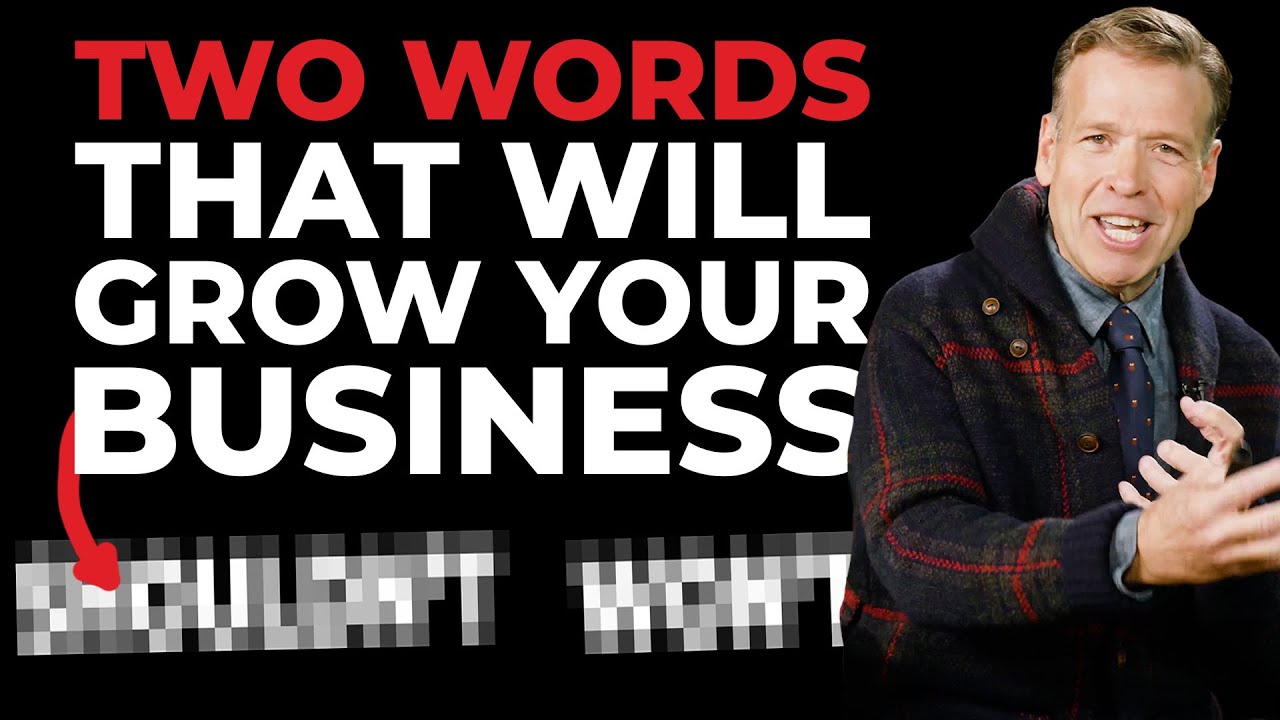
Two Words That Will Grow Your Business
StoryBrand With Donald Miller
Use 'shouldn't' and 'won't' to clearly communicate pain relief and transformation in your marketing.
Executive Summary
In the video "Two Words That Will Grow Your Business," the speaker emphasizes the importance of using simple, impactful language in marketing to effectively communicate with clients. The two key words highlighted are "shouldn't" and "won't," which help frame a customer's pain points and the relief offered by a product or service. By incorporating these words into messaging, businesses can create powerful emotional connections, enhance clarity, and ultimately drive sales.
Key Takeaways
- Incorporate the words 'shouldn't' and 'won't' into your marketing messages to highlight pain points and the benefits of your product or service.
- Use simple, clear language in all customer communications to reduce cognitive load and enhance understanding, avoiding complex jargon.
- Repeat your key messages across all marketing channels, including social media, emails, and website content, to reinforce your brand's value proposition.
- Engage customers by asking questions that identify their pain points, then follow up with how your product can resolve those issues using 'shouldn't' and 'won't'.
Key Insights
- Simplicity in messaging is crucial; complex ideas confuse customers, leading to hesitation and lost sales. Clear, repeatable phrases resonate better and drive engagement.
- The words 'shouldn't' and 'won't' effectively frame marketing messages by highlighting pain points and offering solutions, creating an emotional connection that motivates action.
- Using simple language not only clarifies communication but also positions the brand as empathetic, making customers feel understood rather than intimidated by complex jargon.
- Repetition of key phrases across various marketing channels reinforces brand messaging, creating familiarity and aiding memory retention, which is essential for effective communication.
- Understanding cognitive load theory reveals that consumers are more likely to engage with straightforward, emotionally charged messages, emphasizing the importance of clarity over cleverness in marketing.
Summary Points
- Using simple, repeatable messages helps customers quickly understand your value proposition.
- The two powerful words to incorporate are 'shouldn't' and 'won't' for effective marketing.
- These words highlight pain points and promise relief, motivating customer action.
- Simplicity in messaging reduces cognitive load, enhancing comprehension and decision-making.
- Repetition of your message across various platforms builds familiarity and reinforces your brand.
Detailed Summary
- The speaker emphasizes the importance of concise messaging, stating that simple, repeatable phrases can effectively communicate the value of a business and its offerings to potential clients.
- He introduces two powerful words, 'shouldn't' and 'won't', which can significantly enhance marketing messages by framing problems and solutions in a relatable manner.
- The speaker explains that high cognitive load messages are often ignored, advocating for simplicity in communication to ensure customers quickly understand the benefits of a product or service.
- He shares a personal anecdote about his knee surgery, illustrating how clear, simple language from a doctor can alleviate patient anxiety and foster trust.
- The video discusses cognitive load theory, highlighting that excessive information can hinder comprehension and decision-making, making clarity essential for effective marketing.
- The speaker cites a Stanford study showing that framing messages as loss avoidance ('shouldn't') is more compelling than gain achievement, reinforcing the effectiveness of the words 'shouldn't' and 'won't'.
- Real-world examples demonstrate how various industries can utilize 'shouldn't' and 'won't' to connect with customers emotionally and position their products as solutions to problems.
- Finally, the speaker encourages viewers to consistently use these phrases across all marketing channels to create familiarity and reinforce their messaging, suggesting that repetition is key to effective communication.
What are the two words that the speaker claims will grow your business?
Why does the speaker believe that simpler language is more effective in marketing?
According to the speaker, what is the primary motivation behind human behavior in marketing?
What does the speaker suggest is a common mistake businesses make in their messaging?
In the context of the video, how can the phrase 'you shouldn't have to deal with that' be effectively used?
What is the significance of the Stanford behavioral study mentioned in the video?
How does the speaker suggest businesses should use the words 'shouldn't' and 'won't'?
What is the overall message of the video regarding communication in business?
What are the two powerful words to grow your business?
The two words are 'shouldn't' and 'won't'. These words help position your product as a solution to a problem and promise relief from pain or frustration.
Why is simplicity important in business messaging?
Simplicity is crucial because complex messages create a high cognitive load, making it difficult for customers to understand and remember. Clear, simple language helps customers quickly grasp the value of a product.
What does 'cognitive load theory' suggest?
Cognitive load theory suggests that human working memory is limited. When too much information is presented, comprehension and decision-making suffer, leading to confusion and hesitation.
How do the words 'shouldn't' and 'won't' function in marketing?
'Shouldn't' highlights the pain or problem the customer faces, while 'won't' promises relief or a positive outcome after using the product. Together, they create a compelling emotional appeal.
What is a common mistake businesses make in their messaging?
A common mistake is using complex language to sound smart, which can confuse customers and make them feel inadequate. Clarity should always take precedence over cleverness.
How can 'shouldn't' and 'won't' be applied in a healthcare context?
In healthcare, a doctor might say, 'You shouldn't have to live with pain, and after treatment, you won't.' This frames the treatment as a solution to a significant issue.
What is the impact of emotional words in marketing?
Emotional words trigger quicker responses from the brain's amygdala, leading to stronger engagement and memory retention compared to logical or complex language.
Why is repetition important in marketing messages?
Repetition helps form lasting associations in the audience's mind. The human brain typically needs five to seven exposures to fully absorb and remember a message.
How should businesses use the words 'shouldn't' and 'won't'?
Businesses should incorporate these words in all marketing materials, including ads, websites, and conversations, to create clear and impactful messaging that resonates with customers.
What is an example of using 'shouldn't' and 'won't' in a luxury product context?
An example could be, 'You shouldn't feel guilty about buying something you love, and when you purchase our handbag, you won't feel guilty at all.' This addresses customer emotions effectively.
What are sound bites in marketing?
Sound bites are short, repeatable messages that convey the core value of a product or service. They help customers quickly understand the benefits and reasons to engage.
How can businesses identify their 'shouldn't' and 'won't'?
Businesses can analyze customer pain points and desired outcomes to create specific statements that address frustrations and offer solutions, framing their products effectively.
What role does clarity play in marketing?
Clarity is essential in marketing as it ensures that customers quickly understand the value proposition. Clear messaging reduces confusion and enhances the likelihood of conversion.
What is the significance of using simple language in healthcare explanations?
Using simple language in healthcare helps patients understand procedures without anxiety. Clear explanations reduce confusion and build trust between the patient and the healthcare provider.
How can businesses ensure their marketing messages resonate?
By consistently using clear, emotional language and repeating key phrases like 'shouldn't' and 'won't', businesses can create familiarity and reinforce their messaging across all platforms.
Study Notes
The video opens with the speaker introducing the concept of two powerful words that can significantly enhance business growth. The speaker emphasizes the importance of using simple, repeatable messages, or sound bites, that clearly communicate the value of a product or service. This approach helps potential customers quickly understand the benefits and the problems the business solves. The speaker suggests that many businesses struggle with overly complex language, which can confuse customers and hinder sales. The focus will be on how simplicity in messaging can lead to better customer engagement and increased sales.
At around 3 minutes, the speaker discusses why simple and repeated words are effective in marketing. He explains that high cognitive load messages are often ignored because they require too much effort to understand. The speaker uses examples from politics to illustrate how changing language can influence public perception and behavior. He stresses that clarity is more important than cleverness in marketing, as complex ideas can lead to confusion and hesitation among customers. This section highlights the need for businesses to communicate in a straightforward manner to enhance customer understanding and retention.
The speaker builds suspense around the two words that can transform business messaging. He assures viewers that they will be surprised by the words he will reveal. He mentions that these words have already proven effective for one of his mastermind clients, leading to increased business. This section is crucial as it sets the stage for the main takeaway of the video, emphasizing the anticipation and importance of the upcoming revelation.
At approximately 10 minutes, the speaker finally reveals the two words: 'shouldn't' and 'won't'. He explains how these words can be used to frame marketing messages that resonate emotionally with customers. 'Shouldn't' highlights a problem or injustice that customers face, while 'won't' promises relief or a positive outcome after using the product or service. This dual framing connects deeply with human motivations, making the messaging more compelling and persuasive. The speaker provides examples of how these words can be effectively integrated into various marketing contexts.
Around 15 minutes into the video, the speaker references a Stanford behavioral study that demonstrates how people are more motivated by the fear of loss than the prospect of gain. He explains that framing messages around what customers 'shouldn't' have to endure can lead to higher engagement and conversion rates. This insight reinforces the effectiveness of the 'shouldn't' and 'won't' messaging strategy, providing a scientific basis for its use in marketing. This section is important for understanding the psychological principles behind effective communication.
In this section, the speaker provides practical examples of how to apply 'shouldn't' and 'won't' in various industries, including healthcare, insurance, and retail. He illustrates how these phrases can be tailored to address specific customer pain points and aspirations. For instance, a dentist might say, 'Your legs shouldn't look like that, and after my varicose vein surgery, they won't.' This practical application helps viewers visualize how to implement these concepts in their own marketing strategies, making it a valuable takeaway for business owners.
Towards the end of the video, the speaker emphasizes the importance of repetition in marketing. He explains that the human brain needs multiple exposures to a message to form a lasting association. By consistently using 'shouldn't' and 'won't' across all marketing channels, businesses can create a sense of familiarity and reinforce their messaging. This section highlights the necessity of maintaining consistency in communication to enhance brand recognition and customer recall, which is critical for effective marketing.
In the final moments of the video, the speaker encourages viewers to subscribe to his weekly soundbite series for more insights on effective marketing strategies. He reiterates the power of 'shouldn't' and 'won't' as essential tools for business growth and encourages viewers to start using these phrases in their messaging. This conclusion serves as a motivational push for viewers to take action and apply what they have learned, making it an important part of the overall message.
Key Terms & Definitions
Transcript
Today I want to talk about two words that [music] will grow your business. If you follow my channel at all, you know I am a big believer in sound bites. That is short repeatable messages that you can say over and over that just allow anybody to understand why they should do business with you, what problem you solve, how you can change their life. I think the problem is in most businesses we're explaining things in too nuanced of a way. We're not using the same words and it's very difficult. we sort of fumble over our words when we're trying to explain why people should buy our product or service or or whatever that is. I want to talk about two words that you should incorporate in your vocabulary, especially in persontoperson interaction with a new client. I think this is going to be really really helpful for you. Anything where you're you're interacting with a personally in order to deliver the product. These two words will work in marketing copy. It'll work in product descriptions, all that kind of stuff. And the words are really going to surprise you. I guarantee you if you try to guess what these words are right now, you will not guess them. They are going to surprise you. But we've already seen it work in one of my mastermind clients. They're using these two words and they're seeing an a pretty big uptick in business. All right. What are the two words that will grow your business? I'm not going to tell you yet. That's called opening a story loop. I am going to show you in just a few minutes, though. But first, I want to talk about why really simple words and repeated words work to grow a business. When it comes to messaging, the simpler the ideas, the better. Why? Because high cognitive load messages get ignored. What's a high cognitive load message? A high cognitive load message is a message that I have to think really hard in order to understand what in the heck that you are talking about. I shouldn't have to think. I should know very, very quickly what it is that this is going to get me and what I'm going to have to pay. What negative thing is going to happen if I don't buy your product? Don't make me think about that. I want you to explain it to me in a relatively short, simple way. Single words can trigger emotion, memory, and action. Like politicians use words like fair and just. And you know, I remember uh when the Republicans changed the estate tax to the death tax, all of a sudden everybody was against it. Well, why why should you be taxed for dying, right? and well we should tax people's estates is different than we should tax people for dying and take away the money that they should be able to give to their kids. You know those that simple you know change in language uh affected uh tax policy like crazy. So these words matter a lot and the words that you use to talk to your clients with really help them understand very very quickly what it is that you offer especially if they emote some sort of uh some sort of emotion. The human brain craves simplicity. Complex ideas cause confusion and hesitation. So when you're talking and explaining, if you're a doctor and explaining a procedure to your patient, you've got to use really, really simple language, otherwise they're going to get nervous. I remember I went and got knee surgery. I got double knee surgery several years ago. And I went to the first doctor and he tried to explain it and blah blah blah. And the next doctor that I went to didn't try to explain how the procedure worked. He just said, "Look, we're going to straighten up that knee and it's not going to hurt anymore. You're going to be able to ride a bike for 25 miles." You know, to use the kind of language that I would understand, I'm like, "Okay, this is my guy." So, the human brain craves simplicity. Complex ideas cause confusion and hesitation. In marketing, clarity beats cleverness every time. There's a temptation when we talk about our brand to be clever. And here's another temptation. It's really important. If you have a complicated product and you want people to buy it, you're going to be tempted to sound smart. You're going to be tempted to use language that makes you sound smart. I want I don't want you to think of it that way. Every time you use language that makes you sound smart, here's how I want you to think of it. You're making your customer feel stupid. So, why not? By the way, really, really intelligent people can explain things in simple terms. Uh, people who want to sound smart, they just confuse people and make them feel dumb and that costs you sales. The science behind simplicity is really awesome. Cognitive load theory by sweller. This is back in 1988. Mayor and Moreno repeated in 2003. Found some things. Key finding. Human working memory is limited. When too much information is presented, comprehension and decision-making suffer. When you share too much information with your customer, they have trouble comprehending it and remembering it. And let me just tell you this, they have trouble telling their friends about it. So word does not spread about your business. Studies in cognitive psychology show that people remember short emotional and clear messages far more than rational or complex ones. These two words, by the way, posit a lot of emotions. The brain's amygdala, our emotional center, reacts faster to emotional words than logical words. You trying to sound smart goes the opposite direction. Logical words. Also, simplicity equals speed and speed equals sales. The sales process speeds up when you use and repeat simple [snorts] words and ideas. All right, what are the two most powerful words nearly any brand can use? Are you ready? What did you guess? I'm curious. What? Put in the comments what you guessed the two words were. And I guarantee you very few of them got them. Don't cheat because you can watch the next slide and get them. What do you think they are? Well, here they are. Shouldn't and won't. Shouldn't and won't are two of the most powerful words you can employ to build a business. What am I talking about? You shouldn't have to deal with that and after you buy my product, you won't or some variation of that. You shouldn't. You are suffering an injustice by having to deal with that and I'm going to stop that injustice from happening. You have now positioned your product as the end to a pain as the end to a frustration as and as the end to an injustice that is happening to your customer. That is a very very powerful sentence. Why is it so powerful? Well, it's a motivating sentence. Human behavior is driven by two primal motivations. Avoiding pain, negative outcomes, and seeking pleasure, positive outcomes. The most powerful marketing messages connect to both. you shouldn't experience this and instead you should experience this. The words shouldn't and won't do exactly this. Let's look at some more science behind the words shouldn't and won't. In a Stanford behavioral study on decision framing, people were two and a half times more likely 250% more likely to act, thus pull out their credit card when language framed a problem as a loss avoided rather than a gain achieved. What does that mean? Don't lose your savings is stronger than save more. People are more motivated to not lose something than they are to gain something. You shouldn't have to deal with that. And if you buy, you won't. Leverages the exact same principle. Now watch how this is employed in a specific industry. There's a friend of mine who coaches a an orthodontist in Chicago. They sell the number one most Invisalign treatments in the world. So they are the highest selling Invisalign. the nurse practitioner or the dental hygienist when doing the intake session, cleaning their teeth or whatever, says to the patient, "Does the crowding in your lower teeth bother you?" Of course, it bothers you. If you say that to me, it would bother me. Uh, and they admit that it does. They say that it does. And then say, "Well, I'll ask the doctor to tell you about something that can fix that." And then the doctor comes in and talks about Invisalign. First of all, does that sound manipulative or deceptive? No, it's not manipulative or deceptive. The person doesn't want crowding in their lower teeth. So this is just a a dentist doing what a dentist does but doing it helping the invite the customer into a story in which they identify that they have a problem crowding in their lower teeth and the dentist throws a rope down into the hole and says use Invisalign to get out of that hole and now you're changed and you don't hate your your bottom teeth anymore and you really like your smile. A lot of people more than any other dentist he's helped them like their smile more. Isn't that what a dentist is supposed to do? The two words that can transform your marketing are shouldn't and won't. The first shouldn't shines a light on the pain or problem your customer is experiencing. It names what feels unfair, frustrating, or unacceptable. The second won't delivers the promise of relief and transformation. It paints the picture of life after your product or service has solved the issue. Used together, they form a powerful emotional bridge, moving your audience from discomfort to satisfaction and positioning your offer as the clear path between the two. You can do this. You can use you shouldn't have to uh you shouldn't have to experience a leaky roof. You shouldn't have to go without power when the power grid goes down. Shouldn't and won't can work all over the place. In fact, let's look at some examples. Here's another medical example. A doctor. In fact, this example is a doctor in my story brand mastermind and we came up with shouldn't and won't for them and it's working really well. Your legs shouldn't look like that and after my varicose vein surgery they won't, right? Like if you're if he's meeting with a client, just look at your legs, say, "Hey, I you know, do your legs bother you?" They actually shouldn't look that way and they don't have to. And here's the surgery that I can do and when I'm done they won't. If you don't have a shouldn't and won't for your business, my question is what are you selling? Right? Like it's very hard for me to even think of a single business that doesn't have a shouldn't and won't. So, you can actually use shouldn't and won't to explain anything to anybody in very short succinct language. It is a great soundbite. Let's let's look at something even more complicated complicated. An insurance advocacy example. This is an actual sound bite that we're using for another member of my mastermind. She gets insurance companies to pay pediatricians what insurance companies owe them. Pediatricians, a lot of times insurance companies try not to pay the pediatrician for services that they have provided because they're trying to save money, right? They're trying to make more money. And if they pay pediatricians, they're not going to make money. And my client, my c my client in my mastermind gets them to pay. And so this is something she could use on her website. You shouldn't get ripped off by insurance companies. And if you hire us, you won't. I'm going to get them to pay. Now, my wife said to me, "Don, that's great for like medical and insurance, but what if it's like a luxury item, like a handbag?" And I immediately said to her, "Oh, that's easy. You shouldn't feel guilty about buying something you love or you want. And when you buy our handbag, you'll be too busy loving it to feel guilty." Right? There it is. You shouldn't feel guilty about buying something you want. And when you buy our handbag, you'll be too busy, in other words, you won't. You'll be too busy loving it to feel guilty. All right, let's look at a B2B example because some of you some of you are saying, "Look, I'm business to business. Will this work for me?" Your sales team shouldn't waste hours on manual reports and with our automation platform, they won't. Again, shouldn't and won't. Let's look at a real estate example. You shouldn't settle for a home that doesn't feel right. And with our agents, you won't. What about a financial adviser? Just keep going, right? You shouldn't have to guess if you're ready for retirement. And with our planning process, you won't. You see how this works in just about anything. I can't think of a single industry that shouldn't and won't wouldn't work for to be a very powerful soundbite that grows your business. Fitness and wellness, you shouldn't feel exhausted all the time. And with our program, you won't. What about hospitality? A restaurant example. You shouldn't have to choose between healthy and delicious. And at our restaurant, you won't. Here's an education example. Your child shouldn't dread learning. And in our classroom, they won't. Here's a home service example. You shouldn't worry about who's coming into your home. And with our background check team, you won't. A SAS example, a startup example. You shouldn't lose customers because of slow onboarding. And with our software, you won't. It'll work for you. What is your shouldn't and won't? Do me a favor in the comments. Write your should. You shouldn't have to whatever. And with us, you won't. By the way, that's the beginning of you using the soundbite to grow business because people read those comments and they may click on you and find out a little bit more about you and buy your service. Shouldn't and won't are very powerful words. All right, where should we use these words? Use these two words in all of your marketing and messaging collateral, including Facebook ads, website headers, intake forms, billboards, email campaigns, video scripts, sales presentations, phone scripts, casual conversations, and repeat your sound bites over and over. Now, a lot of you are saying, "Don, this is on YouTube. Everybody's going to start using shouldn't and won't." You know what? If everybody uses shouldn't and won't, everybody's going to be communicating much more clearly. Don't if everybody's doing it and everybody's using it and it's it's working for everybody, why wouldn't you want to use it? And first, and also just be the first to use it. Like, be the first in your industry to use it. And then what's going to happen is you're going to be more clear than your competitor and you're going to beat them. Repetition is key to effective communication because the human brain typically needs five to seven exposures to form a lasting association by consistently repeating your message across every touch point that is used shouldn't and won't on Facebook ads on your website in your emails and your lead generators on your social media in-person conversations. By consistently repeating your message across every touch point you create a sense of familiarity and reinforcement. Your marketing should sound like an intentional echo. Resist the urge to change your message too quickly. Giving it time to sink in allows your audience to truly absorb and remember that message. Okay. If you want more help and more examples of great soundbite strategies to grow your business, I send out a weekly video that is not on YouTube. It is only for people who subscribe to my weekly series and you can find it at weekly soundbite.com. I send that out at weekly soundbite. If you're watching this on your computer, just pick up your phone, scan that QR code, or go to weekly soundbite.com, and I will send you a weekly soundbite strategy teaching you how to use sound bites as the foundation of any marketing and messaging campaign. Go to weekly soundbite.com and I will see you again soon.
Title Analysis
The title 'Two Words That Will Grow Your Business' employs a curiosity gap by suggesting that the viewer will learn two specific words that can significantly impact their business. However, it does not use ALL CAPS, excessive punctuation, or sensational language, making it less extreme in terms of clickbait. The title is straightforward but does create some intrigue about what the two words could be.
The title accurately reflects the content of the video, which focuses on two specific words ('shouldn't' and 'won't') that can help grow a business. The content elaborates on the importance of these words in marketing and communication, aligning well with the promise made in the title. There are no significant discrepancies between the title and the actual content.
Content Efficiency
The video presents a solid amount of unique and valuable information, particularly around the concepts of using simple language and the two words 'shouldn't' and 'won't' to enhance marketing effectiveness. However, there are instances of repetition, especially in emphasizing the importance of simplicity and the cognitive load theory. While the core message is strong, some filler content and tangents reduce the overall density.
The pacing of the video is generally good, but there are moments where the speaker elaborates on examples that could be more concise. The explanations of concepts like cognitive load and emotional triggers are valuable but could be streamlined to maintain engagement. Overall, while the content is informative, it could benefit from tighter editing to enhance clarity and focus.
Improvement Suggestions
To improve information density, the speaker could reduce repetitive phrases and streamline examples. Focusing on delivering key messages more succinctly would enhance clarity. Additionally, cutting down on tangential stories and focusing on direct applications of the two words in various contexts would improve time efficiency. A more structured outline could help maintain a tighter narrative flow.
Content Level & Clarity
The content is accessible to individuals with basic familiarity with marketing concepts. It introduces the idea of using simple, impactful language in business communication, which can be grasped by those who have some exposure to marketing or sales. However, it does not require extensive prior knowledge, making it suitable for beginners as well.
The teaching clarity is quite high, with a logical flow that guides the viewer through the concepts of simplicity in messaging and the specific words that can enhance business communication. The speaker effectively uses examples and anecdotes to illustrate points, which aids understanding. However, some sections could benefit from more concise explanations to maintain focus.
Prerequisites
Basic understanding of marketing principles and familiarity with business communication.
Suggestions to Improve Clarity
To enhance clarity, the speaker could incorporate more structured summaries at the end of key sections to reinforce the main points. Additionally, using visual aids or on-screen text to highlight crucial concepts and examples could help viewers better retain the information presented. Reducing filler phrases would also streamline the delivery.
Educational Value
The content provides strong educational value by emphasizing the importance of simplicity in messaging for business growth. It introduces the concept of 'shouldn't' and 'won't' as powerful phrases that can effectively communicate value and address customer pain points. The teaching methodology is practical, using relatable examples from various industries, which enhances knowledge retention. The content is structured to facilitate learning through storytelling and cognitive psychology principles, making it easier for viewers to grasp complex ideas. The emphasis on repetition and clarity in marketing strategies further supports practical application, ensuring that the audience can implement these strategies in real-world scenarios.
Target Audience
Content Type Analysis
Content Type
Format Improvement Suggestions
- Add visual aids to highlight key points
- Include on-screen text for important phrases
- Incorporate infographics to summarize concepts
- Use engaging animations to illustrate examples
- Provide a downloadable summary or checklist
Language & Readability
Original Language
EnglishVery easy to read and understand. Simple language and clear explanations.
Content Longevity
Timeless Factors
- Universal themes: The concepts of simplicity in communication and effective marketing strategies are applicable across various industries and time periods.
- Fundamental principles: The idea that clear messaging leads to better customer understanding and engagement is a core principle in marketing.
- Timeless concepts: The use of emotional triggers in marketing, such as addressing pain points and offering solutions, remains relevant regardless of market changes.
Occasional updates recommended to maintain relevance.
Update Suggestions
- Incorporate recent case studies or examples of businesses successfully using 'shouldn't' and 'won't' in their marketing.
- Update any statistics or research findings mentioned to reflect the latest data in cognitive psychology and marketing effectiveness.
- Add context about current trends in marketing language and consumer behavior to enhance relatability.